
7 Best Yoga Poses for Female Hormones: Supporting Your Body Through Perimenopause
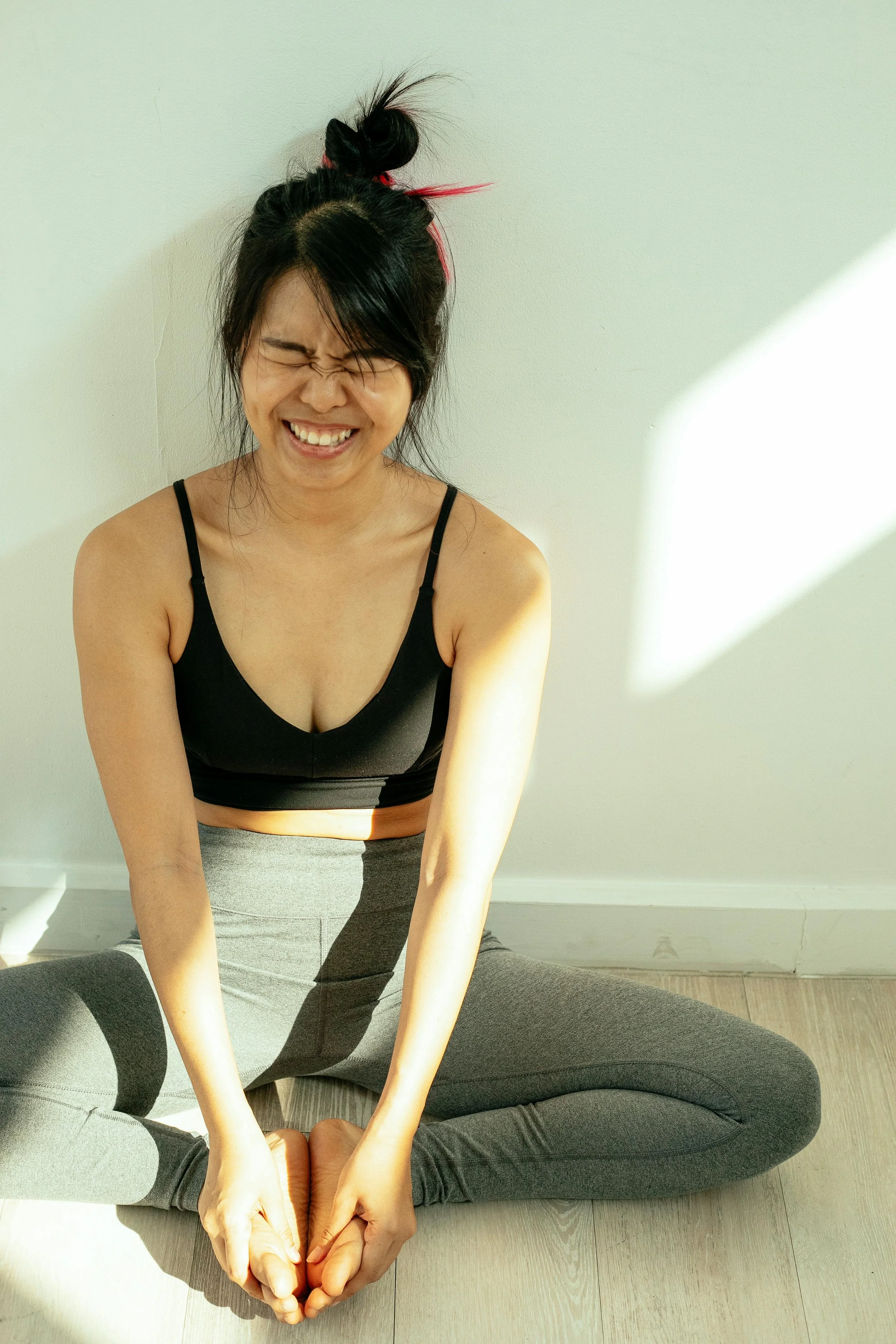
Somewhere in your late 30s or early 40s, things start to feel, well…different.
Hormonal shifts during perimenopause can begin way before menopause itself—often at least ten years prior—and the symptoms can show up in subtle (and not-so-subtle) ways.
I’m 43, and while I’m still in the early stages of perimenopause, I’ve already experienced many of the common (and funky) symptoms or hormone change such as mood swings, insomnia, heart palpitations, and feeling constantly overheated (hence why I rarely go to hot yoga anymore!)
While we can’t stop these hormonal changes, we can support our bodies through this pivotal shift. For me, yoga has become one of the most powerful tools to help navigate this transition.
Why Yoga Helps Balance Female Hormones
During perimenopause, your body becomes more sensitive to stress. This can amplify symptoms like anxiety, sleep issues, and irritability. A consistent yoga practice helps to:
Regulate the nervous system
Lower cortisol (the stress hormone)
Improve sleep quality
Support mood stability
Reduce feelings of overwhelm and heat
Instead of pushing your body harder, this phase of life is inviting a more supportive, intuitive, and cyclical approach to movement. Each time you step onto your mat, listen to what your body needs—recognise that every day will feel different.
It can also be helpful to be mindful of where you are in your menstrual cycle (if you have one). Generally, you may notice you have more energy during the follicular and ovulatory phases, when the body naturally feels more open, active, and resilient.
Best Yoga Poses for Hormonal Balance
When I teach yoga, I’m always aware of who is in the room and I will base the practice on who is in front of me. I specialise in working with women’s bodies, guiding movement and poses that honour where each woman is in her cycle (if she has one) and her stage of life.
Many of the women I work with are navigating the hormonal shifts of midlife, so these are my go-to poses for gently supporting the endocrine system.
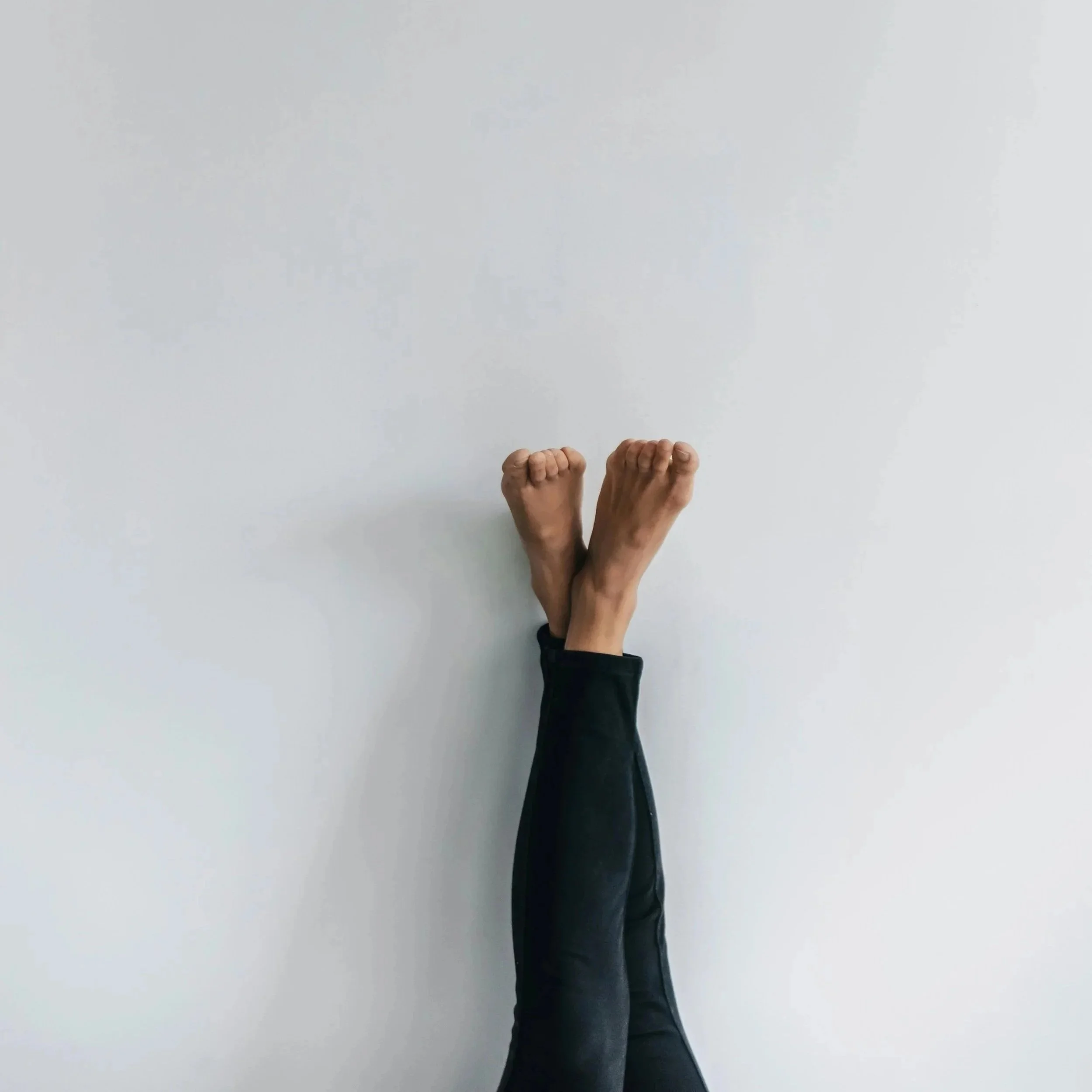
1. Legs Up the Wall (Viparita Karani)
If I could recommend just one pose for women navigating perimenopause, this would probably be it. Legs Up the Wall is deeply restorative and encourages your nervous system to shift into a more relaxed state. Many women describe this pose as instantly calming. It can help ease feelings of overwhelm, encourage relaxation and provide a cooling effect if you're experiencing hot flushes or overheating.
Benefits
Promotes deep relaxation and has a calming effect on the body
A cooling posture that can help ease hot flushes, overheating, and restlessness
Supports the parasympathetic nervous system, making it especially beneficial before bed for deeper, more restorative sleep!
How to do it
1. Sit sideways with one hip touching a wall.
2. Gently swing your legs up the wall as you lower your back onto the floor.
3. Adjust your position so your sitting bones are close to the wall.
4. Rest your arms by your sides or overhead if that feels okay for your shoulders.
5. Close your eyes and allow your breath to slow naturally.
6. Stay here for 5–10 minutes before slowly rolling onto one side to come out.
Make it more comfortable
Place a folded blanket or bolster underneath your hips if your lower back feels uncomfortable, or move slightly further away from the wall if your hamstrings are tight. You can also keep your legs slightly bent if that feels more comfortable.
Tip: for a more energising and strengthening version, you can do shoulder stand (Salamba Sarvangasana) - an inversion which regulates the thyroid and parathyroid glands. Not recommended whilst you have your bleed.
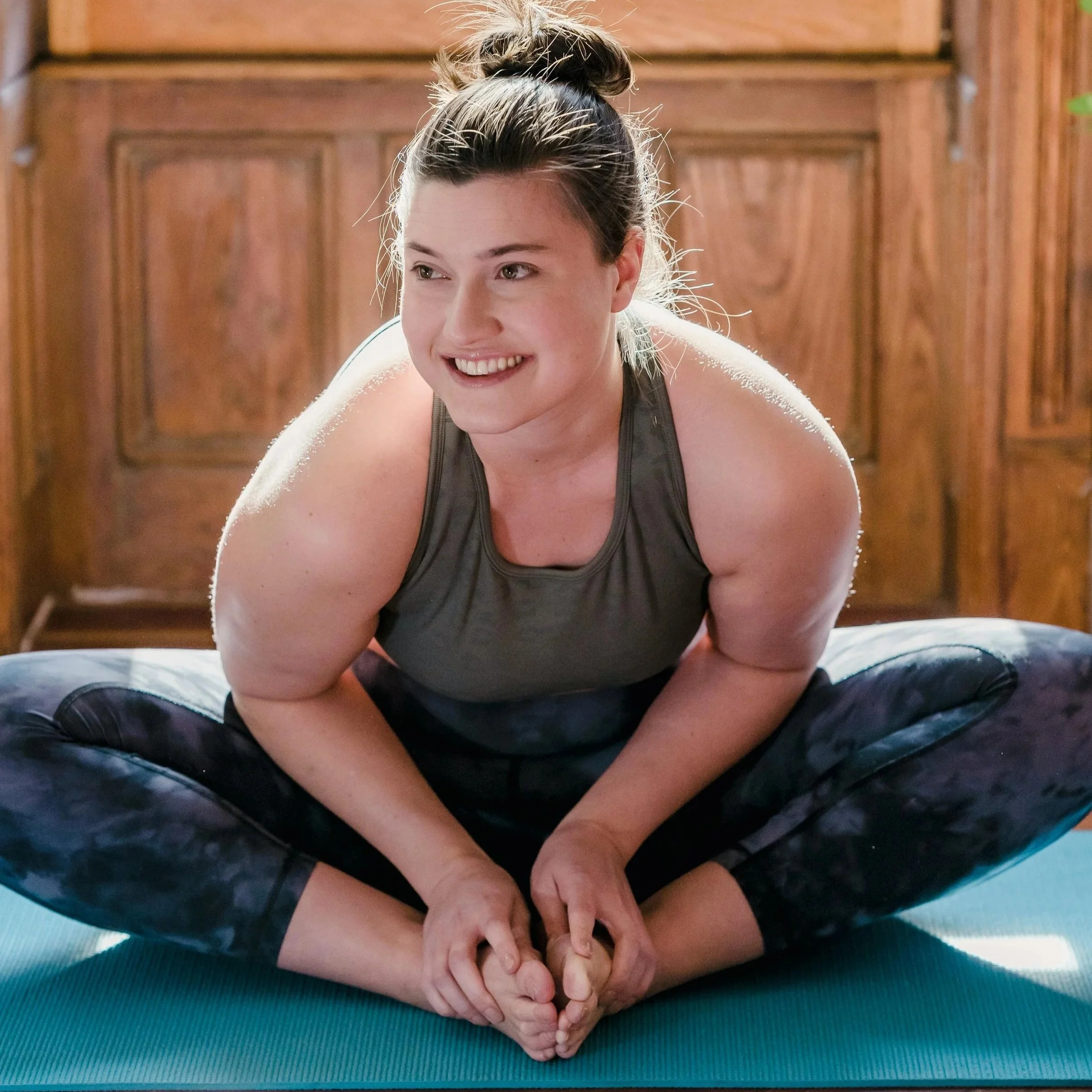
2. Reclined Bound Angle Pose (Supta Baddha Konasana)
Often called the “queen” of restorative yoga poses for women’s hormone health, this deeply nourishing posture supports relaxation, circulation, and emotional balance.
Benefits:
Encourages blood flow to the pelvis, supporting reproductive organs and overall hormonal balance.
May help ease PMS symptoms and support menstrual and reproductive health.
Stimulates the ovary, kidney, and bladder meridians helping to balance the endocrine systems.
Promotes deep relaxation and emotional release, helping to lower stress and cortisol levels.
How to do it
Sit on your mat and bring the soles of your feet together.
Allow your knees to gently fall open to either side.
Slowly lower yourself onto your back.
Rest your hands on your belly or by your sides.
Breathe slowly and stay for 3–5 minutes.
Tip: if you need more of a stretch for the inner thighs bring you feet closer towards you. If you want to reduce the intensity of the stretch, move your feet further away.
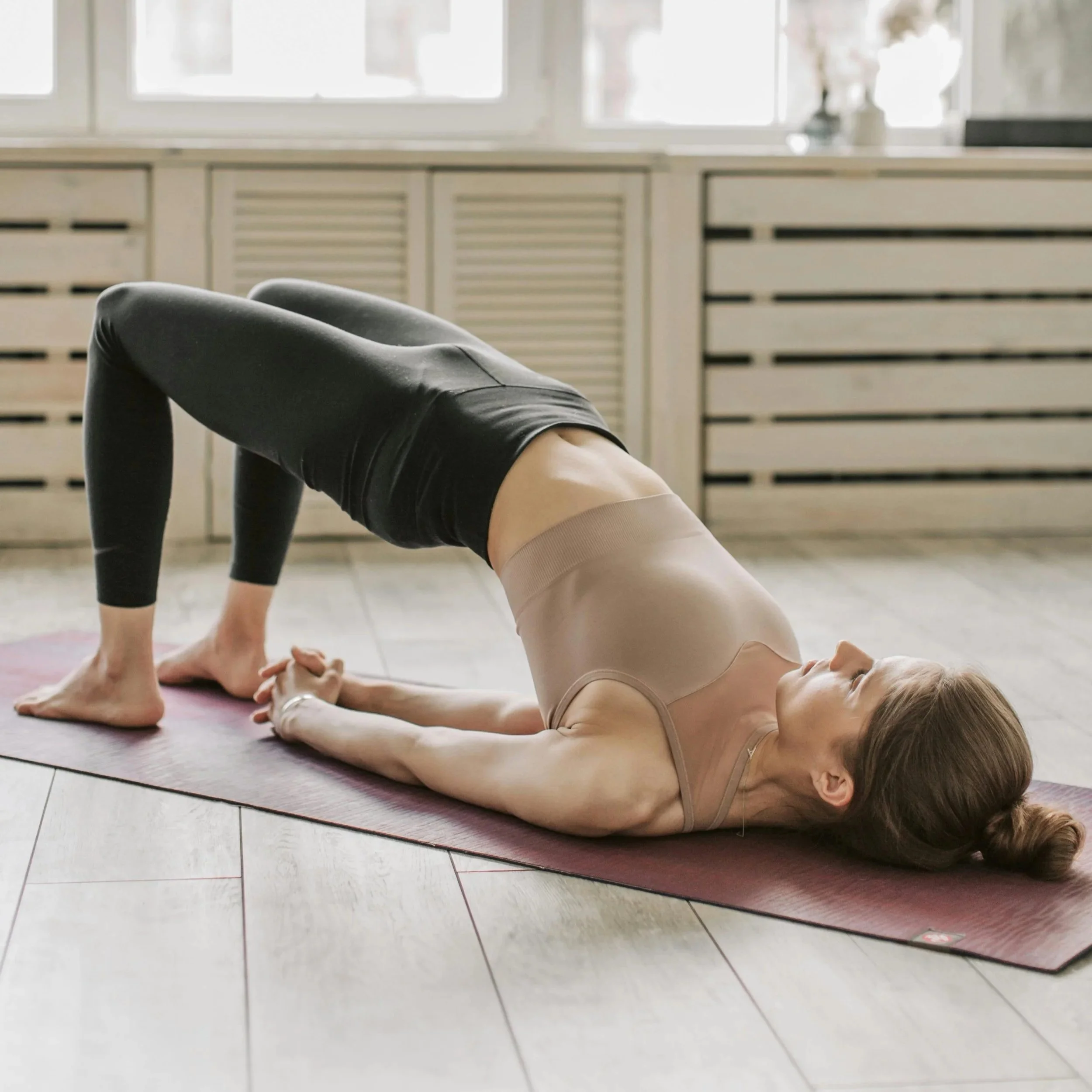
3. Bridge Pose (Setu Bandha Sarvangasana)
This backbend offers significant hormonal benefits by stimulating specific glands whilst helping to regulate the nervous system.
Benefits:
Supports pelvic circulation, increasing blood flow to the reproductive organs
The gentle tuck of the chin creates light compression in the neck, supporting circulation around the thyroid area which helps to regulate metabolism and energy levels
A soft abdominal stretch massages the digestive organs, supporting metabolism and the processing of hormones by the liver and gut.
How to do it
Lie on your back with your knees bent and feet hip-width apart.
Press gently into your feet and lift your hips.
Keep drawing the tailbone towards the front of your mat to lengthen the spine.
Relax your shoulders and arms.
Tip: Place a block or bolster under your sacrum to make this pose restorative—especially supportive during your bleed or when energy is low. Use the lowest height of the yoga block if you're new to the pose or if your lower back feels sensitive.
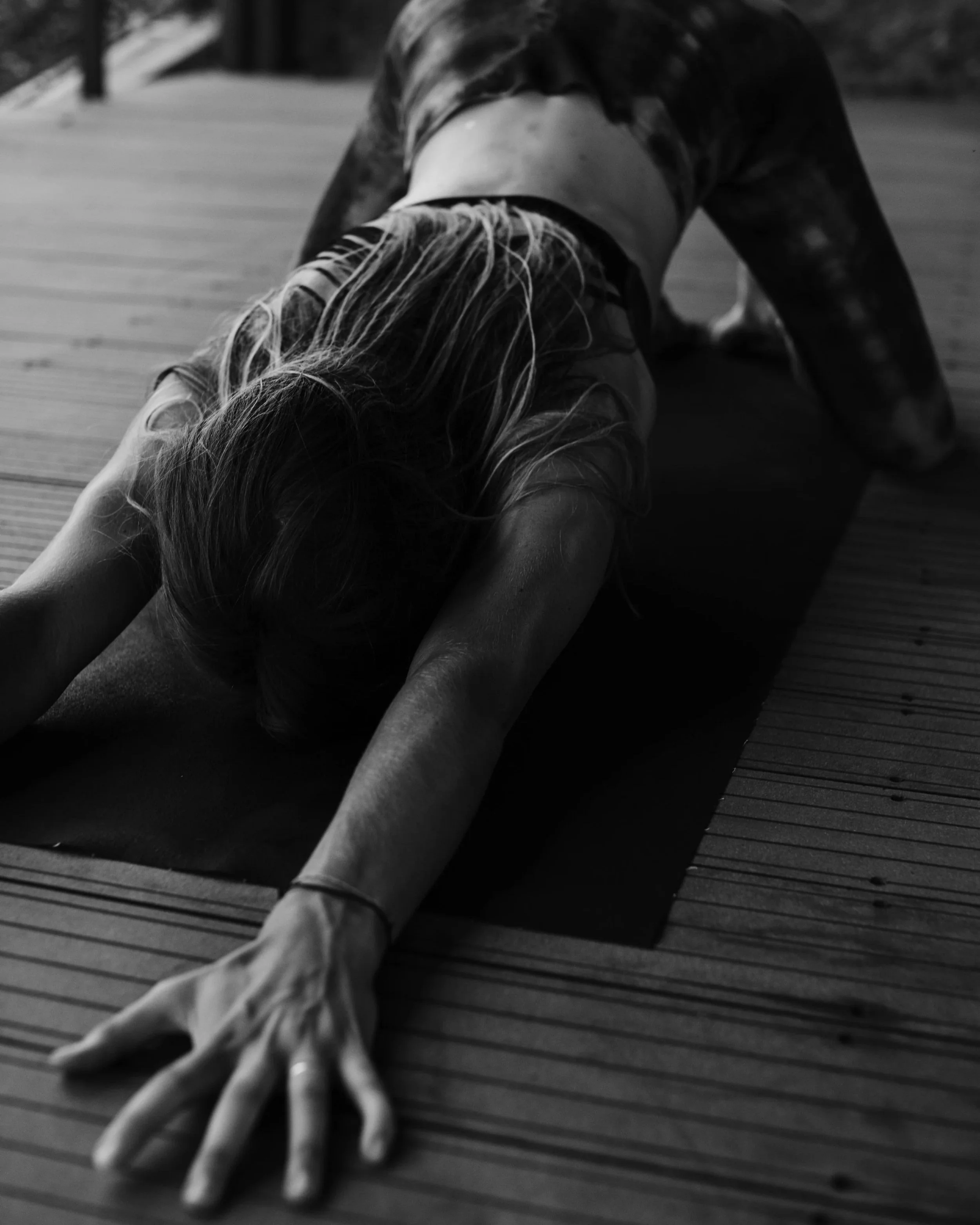
4. Child’s Pose (Balasana)
A grounding posture that helps you reconnect with your breath and body.
Benefits:
The forward-folding motion helps increase GABA levels in the brain, which acts to quiet anxiety and enhance emotional stability
Gentle compression of the abdomen stimulates the endocrine glands, aiding hormonal balance
By relaxing the pelvic muscles and reducing tension in the lower back, it helps to reduce menstrual cramps and manage symptoms of Pre-menstrual tension (PMS).
Stimulates the ovaries which can enhance fertility and hormonal health.
How to do it
Kneel on your mat with your big toes touching.
Separate your knees as wide as feels comfortable.
Sit your hips back towards your heels.
Fold forwards, resting your forehead on the mat or a cushion.
Stretch your arms forwards, or let them rest alongside your body.
Stay for 1–5 minutes while breathing slowly into your back body.
Tip: Place a bolster or several cushions underneath your chest if folding forwards feels uncomfortable or if you want the pose to feel more restorative.
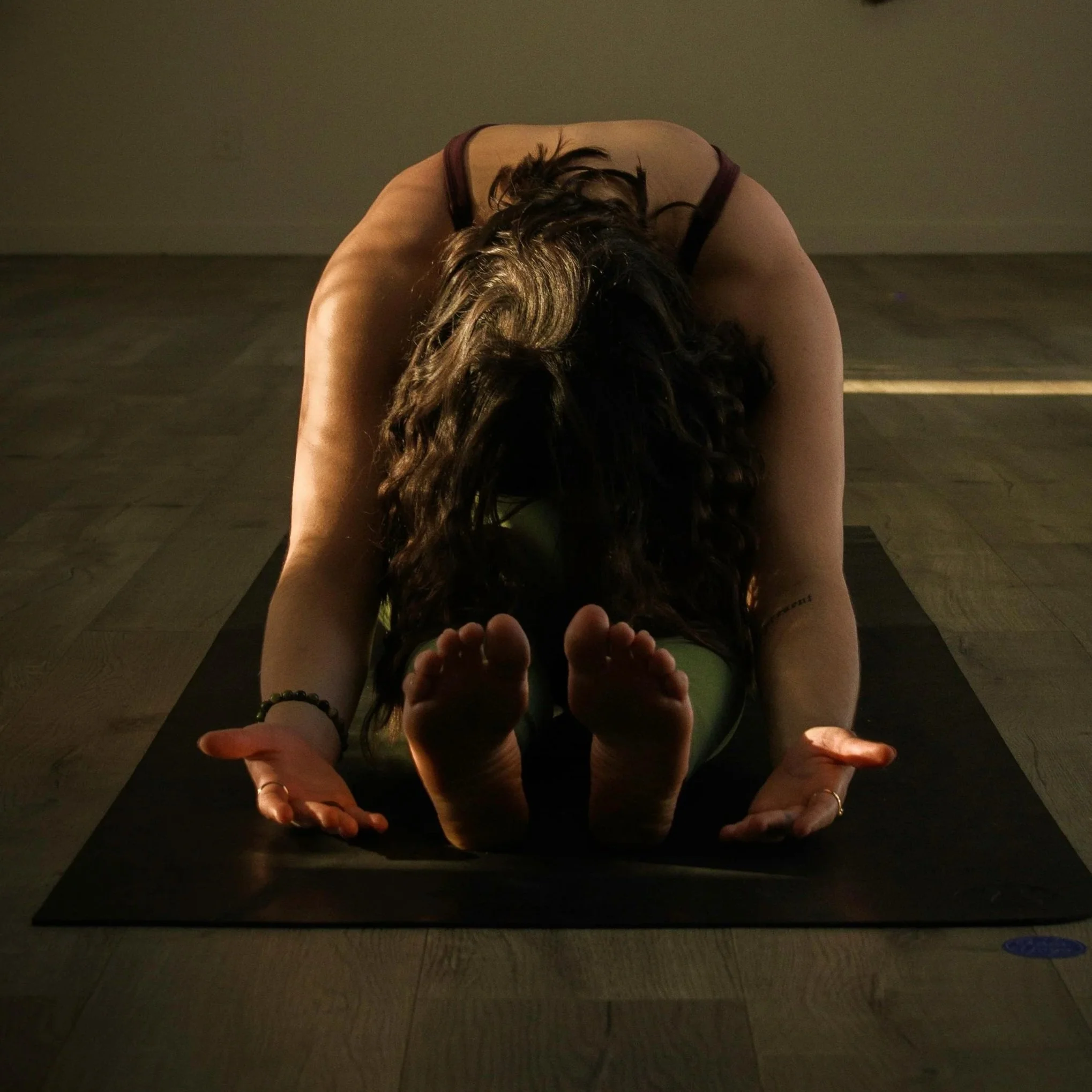
5. Seated Forward Fold (Paschimottanasana)
A cooling, inward-focused pose that stimulates the endocrine system, promoting relaxation, and improving blood flow to the reproductive and digestive organs.
Benefits:
Stimulates the ovaries and uterus, supporting overall reproductive health.
Also helps to relieve menstrual cramps, manage PMS symptoms, and alleviate bloating.
The deep, calming stretch helps release endorphins, which can alleviate mild depression, anger, and emotional fatigue.
How to do it
Sit with both legs extended in front of you.
Sit tall and lengthen your spine.
As you exhale, hinge forwards from your hips rather than rounding your back.
Rest your hands on your legs, ankles or feet.
Keep a soft bend in your knees if needed.
Hold for 1–3 minutes while breathing slowly.
Tip: Imagine reaching your chest forwards rather than trying to pull your head towards your knees. Rest a bolster on your legs for a more restorative version.
free guide: 10 tips to Support Your Body Through Perimenopause
Download your free 13 page guide and workbook which offers practical support to help you better understand your changing body and create habits that nourish you through this important transition.
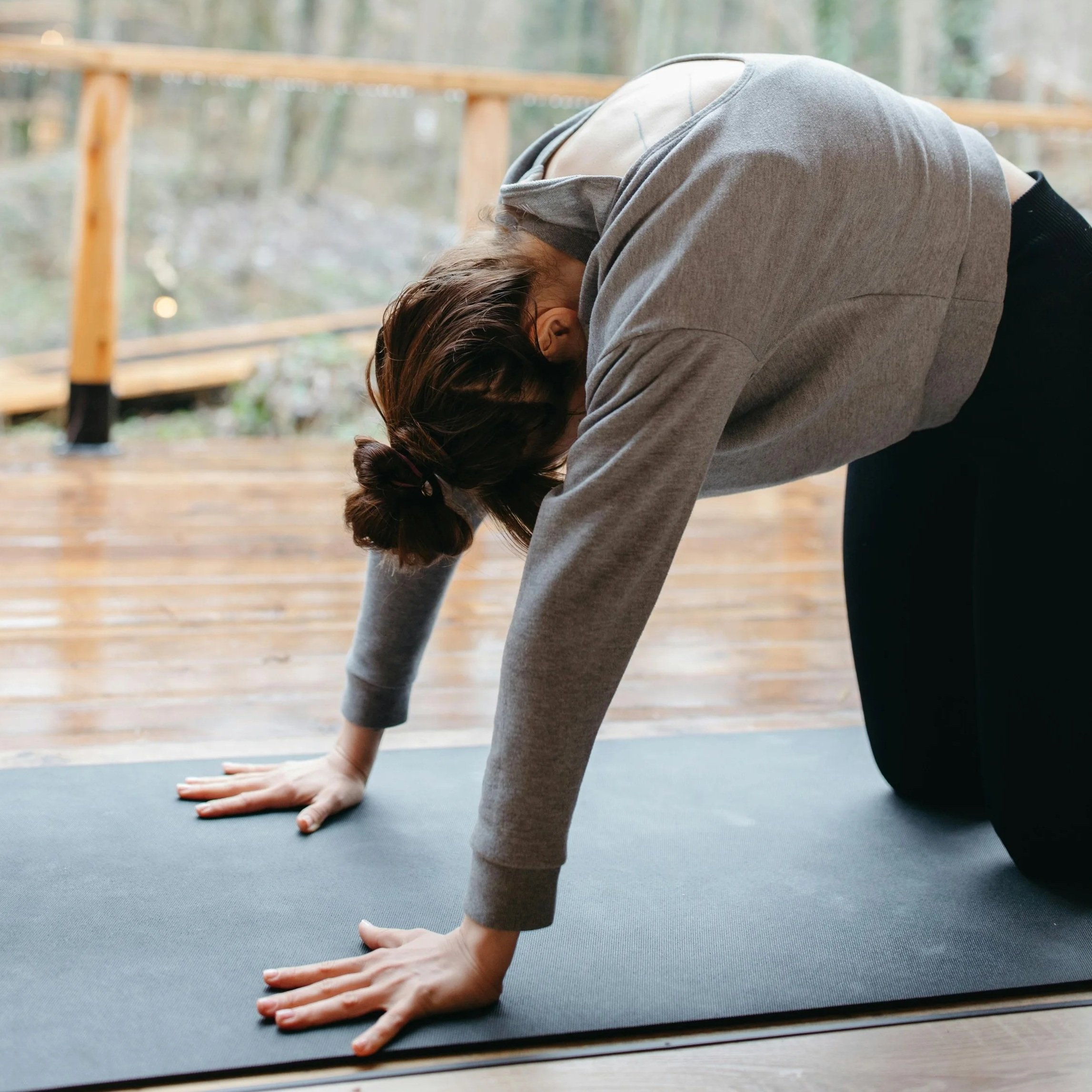
6. Cat–Cow (Marjaryasana–Bitilasana)
Gentle, rhythmic movements of the spine, linking breath with motion.
Benefits:
The movement supports the adrenal glands, which are crucial for managing stress, helping to regulate cortisol levels.
The gentle stretching of the neck during the "Cow" pose helps stimulate the thyroid gland
Increases blood circulation to the pelvis and groin area, easing PMS and helping manage symptoms of Polycystic Ovarian Syndrome (PCOS).
How to do it
Begin on your hands and knees with your wrists under your shoulders and knees under your hips.
As you inhale, lift your chest and tailbone, allowing your belly to soften towards the floor (Cow Pose).
As you exhale, round your spine, drawing your belly in and tucking your chin towards your chest (Cat Pose).
Continue moving slowly with your breath for 1–3 minutes.
Tip: Focus on moving smoothly rather than stretching deeply.
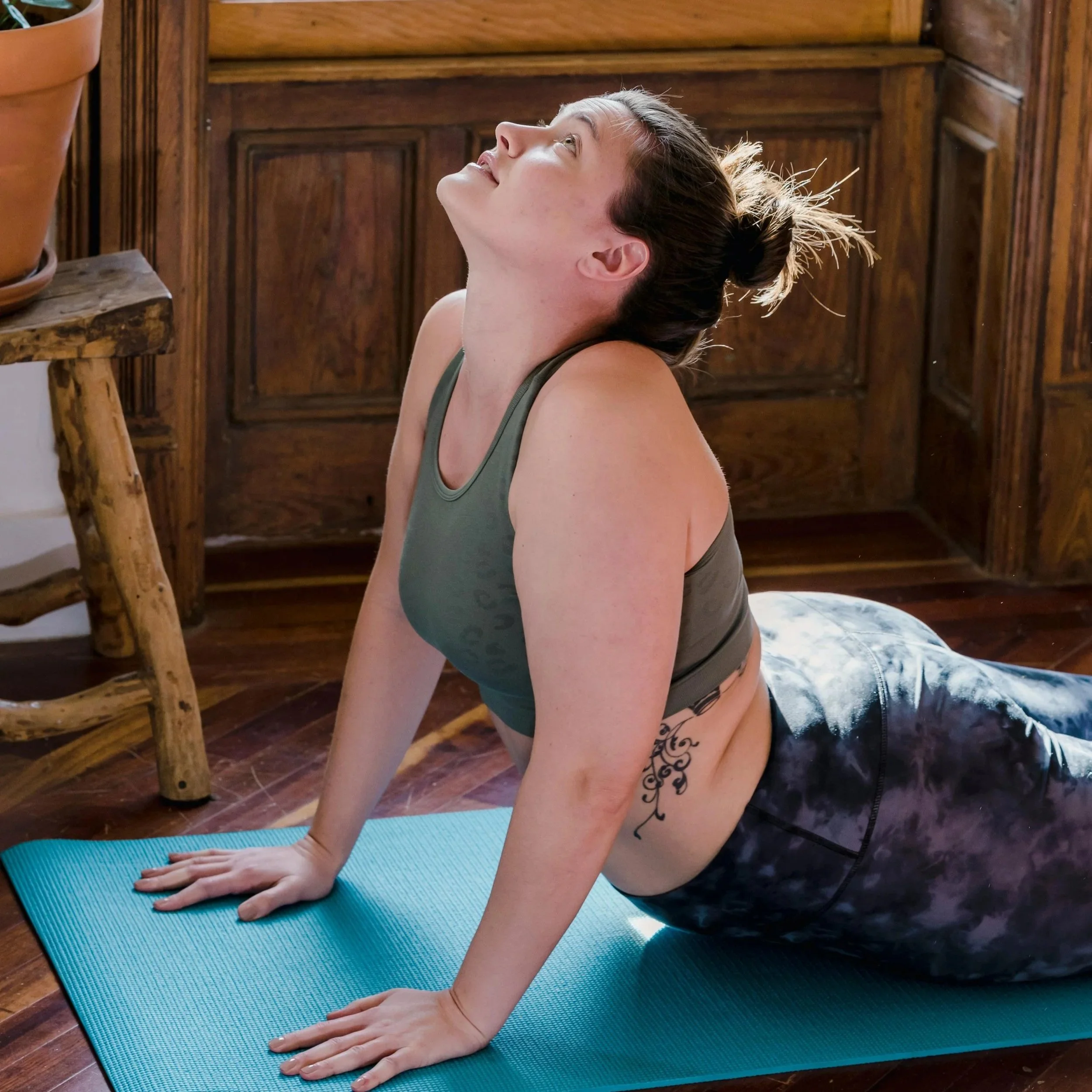
7. Cobra Pose (Bhujangasana)
A gentle backbend which opens the abdomen and pelvis, stimulating the ovaries and improving reproductive health.
Benefits:
Massages the adrenal glands, helping to regulate stress hormones such as cortisol
Opens the pelvic and abdominal area, increasing oxygen and blood flow to the ovaries and uterus
Helps to reduced menstrual cramps and discomfort
Gently stimulates the thyroid gland, which controls metabolism.
How to do it
Lie on your stomach with your legs extended behind you.
Place your hands underneath your shoulders.
Press gently into the tops of your feet.
As you inhale, lift your chest using the strength of your back rather than pushing heavily through your hands.
Keep your elbows softly bent and shoulders away from your ears.
Lower slowly as you exhale and repeat 3–5 times.
Tip: A small Cobra is often more beneficial than trying to lift as high as possible. Think about creating length through your spine rather than forcing a deep backbend.
Thank you for reading and happy practicing! If you’d like to join one of my yoga classes, you can see my class schedule here.
Ready to feel more at home in your changing body?
I was 38 when I first started to notice changes in my body. I found myself searching for answers and realised that much of the support I was looking for didn’t exist. So I created it. Powerful Perimenopause was born from my own need to understand my changing body — and a desire to create the support I wished I’d had. It’s the culmination of hundreds of hours studying women’s health, nervous system regulation, yoga, embodiment and coaching, alongside my own experience of navigating this transition.

Hi, I’m Bea…
I help sensitive, purpose-driven women feel safe to rest, receive & thrive.
Through holistic coaching and restorative retreats, I help sensitive, purpose-driven women to slow down, reconnect with themselves and create a life that feels deeply aligned with who they are.
Because when your body remembers that it's safe, rest becomes possible. And from there, everything changes.
Enjoyed this article? You may also like: