

the tension we carry in our shoulders can teach us about responsibility, emotional weight and learning to let go.
At the end of the year, many of us find ourselves carrying more than we realise. The experiences, expectations, responsibilities and emotional weight of the past twelve months can leave their mark on our bodies, particularly around the shoulders. But what if our shoulders have something to teach us about the things we carry, the responsibilities we take on, and learning to put some of that weight down?
As we come to the end of the year, I’m really feeling a heaviness in my shoulders. It’s almost as if I can feel everything I’ve experienced this year weighing heavily on my body. Somehow, all those months of living and experiencing life over the past year feel as though they’ve gathered around my shoulders.
There is something really interesting about the language we use when we talk about our shoulders. It’s no coincidence that so many of our everyday expressions associate the shoulders with responsibility, obligation and the things we carry.
We have so many expressions in our everyday language that associate the shoulders with the weight of responsibility. We ‘shoulder the burden’, ‘carry the weight of the world on our shoulders’ or describe something as ‘weighing heavily’ on us. And when a difficult period finally passes, we often say that ‘a weight has been lifted off our shoulders’. It's interesting, isn't it, how instinctively we associate this part of our body with the things we carry, both physically and emotionally?
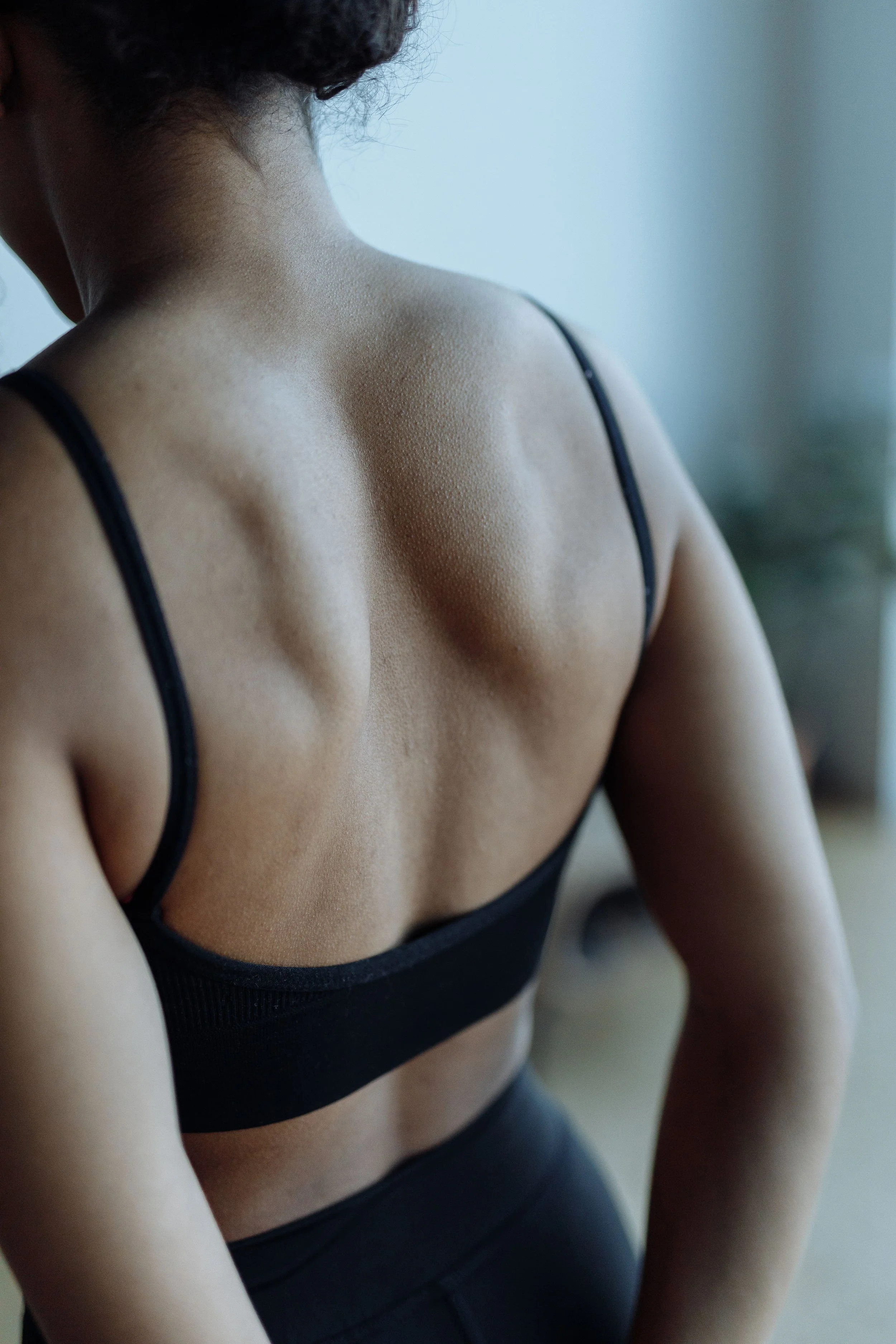
Physically, our shoulders are remarkably hardworking parts of the body. They support the movement of our arms, help us reach, lift, hold and carry. They also tend to be places where we accumulate tension, particularly during periods of stress, uncertainty or prolonged busyness. We might find ourselves unconsciously drawing them up towards our ears, rounding them forwards or bracing through the muscles around our neck and upper back.
Energetically, the shoulders offer an interesting invitation to explore our relationship with responsibility.
What are we carrying? What have we taken on? And perhaps more importantly, what have we taken responsibility for that was never ours to hold?
For many of us, responsibility is something we learn to wear rather well. We become the dependable one, the person who remembers, organises, anticipates and makes sure everything gets done. We hold space for other people's feelings, keep all the plates spinning and quietly take on more than we perhaps have the capacity for.
Sometimes we do this out of love. Sometimes out of duty. Sometimes because we've learnt that being needed makes us feel safe, valued or worthy. Sometimes we simply don't realise how much we're carrying until our bodies begin to ask us to put something down.
As we approach the end of the year, I find this particularly interesting. By November and December, we've gathered up an awful lot. The experiences, expectations, conversations, decisions, disappointments and responsibilities of the past twelve months. Some of them have been chosen consciously; others have accumulated along the way.
There may be things we're still trying to make sense of, situations we're still holding onto, or responsibilities that have quietly followed us from one season into the next.
Perhaps we've been carrying the emotional weight of someone else's difficulties. Perhaps we've been trying to keep everything together at home or at work. Perhaps we've been holding ourselves to expectations that have become increasingly difficult to meet.
And while we might not consciously register all of this, our bodies can sometimes offer us a place to begin noticing.
In yoga, I often invite students to soften around the shoulders. To release the grip of the muscles around the neck, allow the shoulder blades to settle and create a little more space across the collarbones. It sounds like a relatively simple physical adjustment, but there's something quite profound about the experience of consciously putting down the effort of holding ourselves together.
It's not about abandoning our responsibilities or pretending that the things we have to navigate don't matter. Rather, it's about becoming more discerning about what is ours to carry, and what we might be ready to release.
Because there is a difference between taking responsibility for our lives and taking responsibility for everything and everyone around us.
There is a difference between showing up for the people we love and making ourselves responsible for their happiness.
And there is a difference between being capable of carrying something and needing to carry it indefinitely.
Perhaps, as the year draws to a close, we might give ourselves permission to put some of the weight down.
Not everything needs to be resolved before January. Not every loose end needs tying up. Not every expectation needs to be met. And not everything we've carried this year needs to accompany us into the next.
A little invitation to send your shoulders some love
Bring your attention to your shoulders right now.
Notice whether they're drawn upwards, rounded forwards or holding unnecessary tension. There's no need to change anything straight away. Just become curious.
You might like to ask yourself:
What have I been carrying this year?
Which responsibilities genuinely belong to me?
Where might I be taking on more than my share?
What am I ready to put down?
What would it feel like to move into the new year a little lighter?
Allow your shoulders to soften. Let your arms become heavy. Feel the support beneath you. Remember that you don't have to carry it all, lovelies.
And Here are 4 poses which your shoulders will thank you for
1. Melting Heart Pose (Anahatasana)
From all fours, walk your hands forwards and allow your chest to soften towards the floor. Rest your forehead on a block or folded blanket. Keep your hips above your knees and allow your arms to relax.
Stay for 2–3 minutes, breathing into the chest and shoulders.
2. Thread the Needle
From all fours, slide your right arm underneath your left, allowing your right shoulder and the side of your head to rest on the mat or a blanket. Keep your hips comfortable and supported.
Stay for 1–2 minutes before changing sides.
3. Eagle Arms
Sitting comfortably, cross your arms in front of you, bringing one elbow underneath the other. If possible, bring your palms together. Gently lift your elbows and draw your fingertips away from your face.
Stay for 5–8 slow breaths before switching sides.
4. Supported Fish Pose
Place a bolster lengthways beneath your spine, with support beneath your head. Allow your arms to rest out to the sides, palms facing upwards. Let your chest gently open without forcing the shoulders backwards.
Rest here for 3–5 minutes.
Bea x
PS If you’d like to practise with me, you can find out more about my classes, here.

Hi, I’m Bea.
I help sensitive, purpose-driven women feel safe to rest, receive & thrive.
Through holistic coaching, yoga and restorative retreats, I help sensitive, purpose-driven women to slow down, reconnect with themselves and create a life that feels deeply aligned with who they are.
Because when your body remembers that it's safe, rest becomes possible. And from there, everything changes.
Enjoyed this article? You may also like: