
Why Letting Go Is So Hard (And What Yoga Can Teach Us)
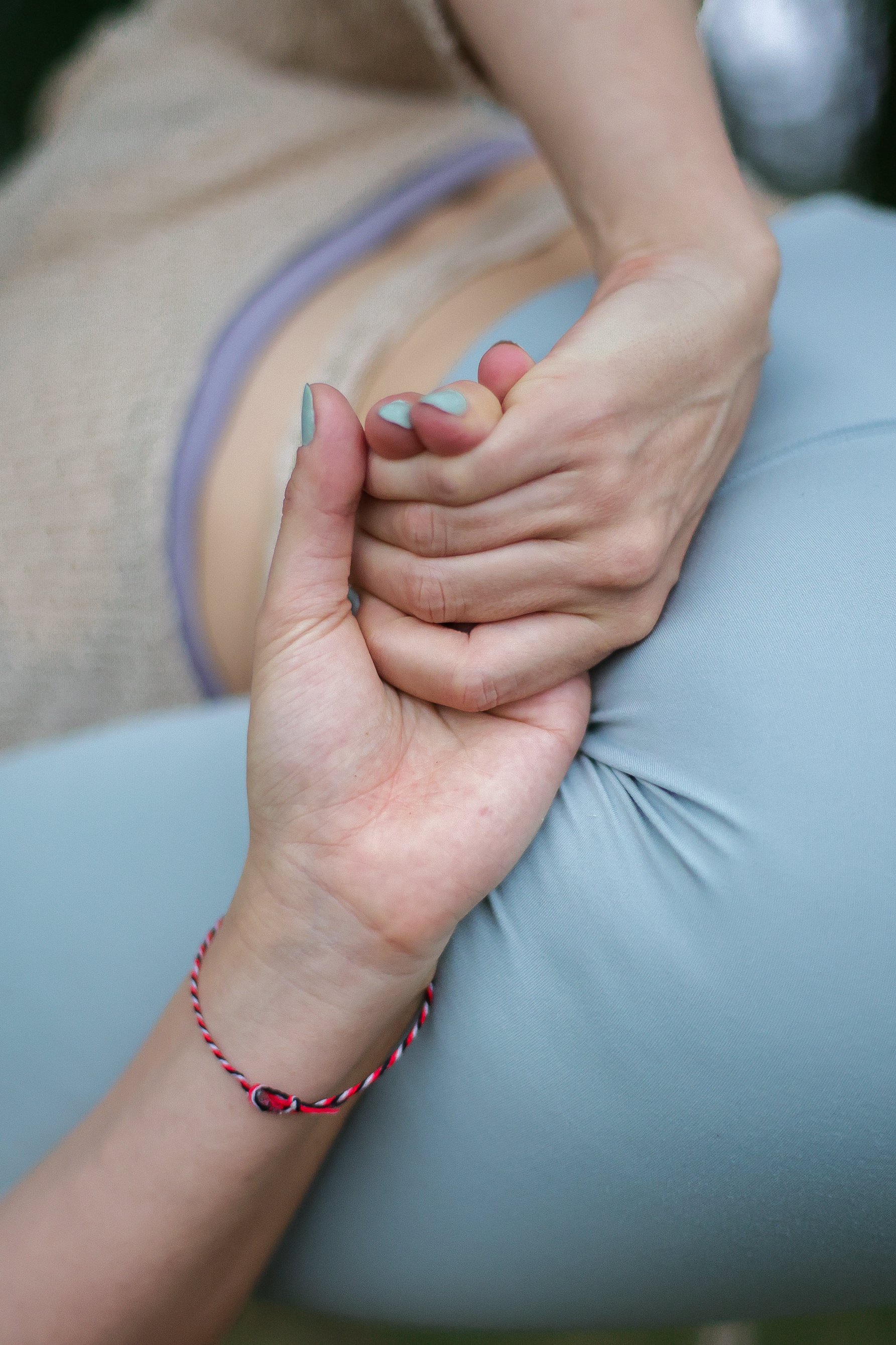
sometimes the hardest things to let go of aren't objects, but the stories we attach to them.
We spend so much of our lives holding on. To people we love. To plans we've carefully made. To expectations of how life should unfold. To old identities, old stories and sometimes even old versions of ourselves that we've quietly outgrown.
Yet one of life's greatest truths is that everything changes. The seasons change. Relationships evolve. Children grow up. Careers shift. Our bodies change. We change. The real question isn't whether change will come. It's how gently we're able to meet it.
One of the yoga philosophies that has had the greatest impact on my own life is aparigraha—the practice of non-attachment. Not because it teaches us to care less, but because it invites us to hold life, and ourselves, a little more lightly.
Ironically, it was a broken mug that reminded me of this recently.
There was nothing particularly special about the mug. It wasn't expensive, handmade or irreplaceable. But for years it had been part of the quiet rituals that shape a life. It held countless cups of tea on slow mornings, travelled from house to house with me and had become woven into memories that mattered.
So when I accidentally dropped it and watched it shatter across the kitchen floor, I was surprised by how upset I felt.
It wasn't really the mug I was grieving. It was everything it had come to represent.
As I swept up the broken pieces, I realised how easily we become attached—not only to objects, but to the stories we attach to them. That simple moment reminded me of one of yoga's most beautiful teachings: Aparigraha, the practice of non-attachment.
At first glance, non-attachment can sound rather cold, as though yoga is asking us not to care. But that's not how I've come to understand it. Aparigraha isn't about loving less. It's about holding life more gently. It reminds us that everything changes, and that the more tightly we cling to people, possessions, expectations or even old versions of ourselves, the more we suffer when life inevitably shifts.
Perhaps that's why autumn has always felt like such a wise season.
As the leaves begin to change colour and the mornings carry the scent of damp earth, nature quietly demonstrates what so many of us find difficult. The trees don't cling desperately to every leaf. They let them go because they trust the seasons. They understand that letting go isn't failure—it's part of the cycle of growth.
I often wonder how different our lives might feel if we trusted our own seasons in the same way.
More Than Letting Go of Things
When we think about attachment, we often think about possessions. We imagine clearing out cupboards, donating clothes or decluttering our homes. While there is certainly value in simplifying our surroundings, I think the attachments that shape us most are often invisible.
We become attached to expectations about how life should unfold. We hold onto relationships long after they've stopped nourishing us. We cling to beliefs about who we are, even when we've quietly outgrown them.
Sometimes we even become attached to our own suffering because it has become familiar.
Yoga gently asks us to notice these places without judgement. Not to force ourselves to let go, but to become curious about what we're still carrying and whether it is helping us move forwards or quietly holding us back.
Learning Non-Attachment on the Yoga Mat
I remember my yoga teacher asking us to place our mats in a different part of the studio every day during my teacher training.
At first, it felt unnecessary. I had found my spot and didn't see why it mattered where I practised.
But that was precisely the lesson.
It wasn't about the mat. It was about noticing how quickly we create a sense of ownership and certainty, even around the smallest things. By simply moving to a different place in the room each day, we were gently invited to loosen our grip on familiarity and discover that we were just as grounded wherever we stood.
That lesson has stayed with me far longer than I expected.
Letting Go in Relationships
Aparigraha also invites us to reflect on the way we hold our relationships.
It's easy to slip into believing that the people we love somehow belong to us, or that our role is to shape their choices. But every person is on their own journey, just as we are on ours.
I often think about this in my yoga classes. The people who attend are not my students. They are people who have chosen to share part of their journey alongside me for a while. My role isn't to hold onto them but to create a space where they feel supported, seen and free to follow whatever path is right for them.
There is something deeply liberating about loving people without trying to possess them.
The Practice of Letting Go
Perhaps practising aparigraha doesn't begin with giving away your belongings. Perhaps it begins with something much quieter.
Noticing where you're holding on too tightly.
A belief that no longer fits.
A version of yourself you've outgrown.
An expectation that's causing more suffering than peace.
A story you've been telling yourself for years.
Sometimes the hardest thing to release isn't an object. It's the identity we've built around it.
As autumn unfolds around us, perhaps nature is offering us a quiet invitation. Not simply to declutter our homes, but to notice what we're carrying within ourselves.
What are you still holding onto?
What have you outgrown?
What might become possible if you loosened your grip, even just a little?
Yoga teaches that freedom isn't found by owning more or controlling more. It begins when we trust ourselves enough to let life move as it needs to.
Perhaps that's the real practice of aparigraha. Not learning how to let go. But learning to trust that, when we do, something beautiful can grow in the space that's left behind.

A POWERFUL PAUSE FOR YOUR INBOX
Enjoyed this article? Why not join the Powerful Pause community to receive more articles like this, as well as insights and inspiration on women's wellbeing, perimenopause, cyclical living, yoga and living a more intentional life.

Hi, I’m Bea…
I help sensitive, purpose-driven women feel safe to rest, receive & thrive.
Through holistic coaching and restorative retreats, I help sensitive, purpose-driven women to slow down, reconnect with themselves and create a life that feels deeply aligned with who they are.
Because when your body remembers that it's safe, rest becomes possible. And from there, everything changes.
Main photo by Frankie Takes Photos.