
I Thought I Was Coping. Then I Got Shingles in My 40s
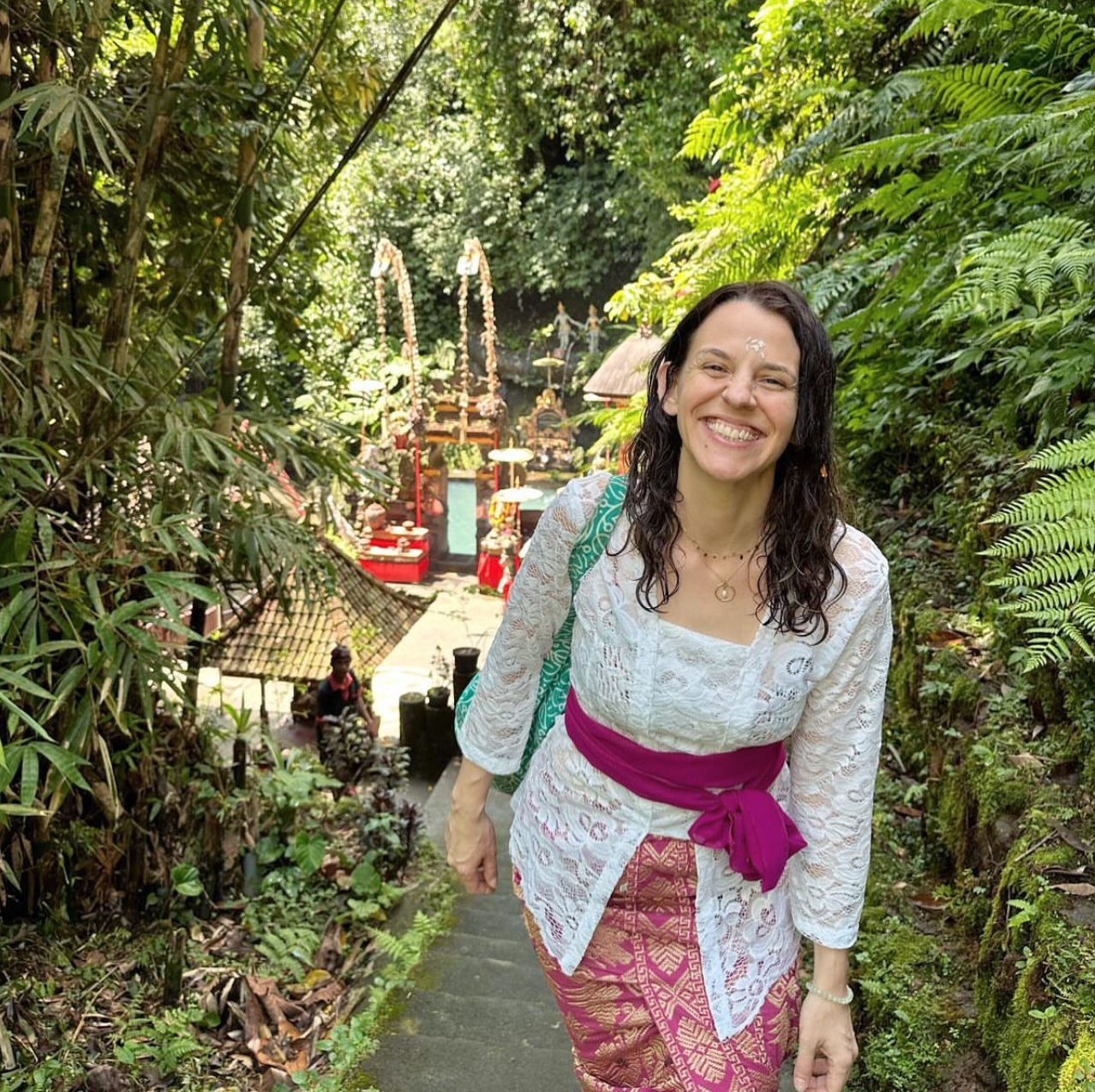
What my body taught me about stress, rest and slowing down
Getting shingles in my 40s, whilst travelling, forced me to confront something I thought I already understood: rest.
I first noticed a dull ache. I was on a plane somewhere between India and Bali, when I began to feel a strange sensation along the right side of my body. It was prickly and uncomfortable, almost as though I had slept awkwardly and pinched a nerve.
I didn't think much of it. I was travelling. I had been on the road for months. There had been long flights, a month in an Indian ashram, different time zones, new food, heat, humidity and the general physical and emotional stimulation that comes with being away from home for an extended period. There were plenty of perfectly reasonable explanations for why my body might have felt a little strange.
Then, a few days after arriving in Bali, a rash appeared.
At first I assumed it was heat rash. I was in Bali, after all. But the pain and itchiness was becoming increasingly uncomfortable and the rash began to develop into a band across one side of my torso. Eventually, I went to a local pharmacist.
She took one look and told me I had shingles.
I remember feeling surprised. Shingles wasn't something I had ever really considered. I had always thought of it as an illness that happened to older people. Something I might hear about my parents having, perhaps, but not something I would be dealing with in my early forties, halfway around the world.
And yet, there I was.
If you've never had shingles, I hope it stays that way. The experience is difficult to describe unless you've felt it yourself. The rash is sore, itchy and uncomfortable, but for me the nerve pain was particularly strange. It felt tingly and sharp, almost like repeatedly hitting your funny bone, except the sensation travelled through my torso. There was a deep sensitivity beneath the skin that made me acutely aware of an area of my body I would normally never think about.
Shingles, also known as herpes zoster, happens when the varicella-zoster virus — the virus that causes chickenpox — becomes active again after lying dormant in the body's nervous system. The first symptoms can be pain, tingling, burning or unusual sensitivity in one area of the body, sometimes before the characteristic rash appears. The rash usually develops on one side of the body and can form a band of painful, fluid-filled blisters.
Fortunately, the pharmacist recognised the signs and I was able to start antiviral treatment within the recommended 72 hour window. Slowly, I began to recover but the thing that has stayed with me most isn't actually the shingles itself. It's what having shingles forced me to do.
Rest.
And that sounds simple. But for me at that point in my trip, it wasn't.
Looking back over those weeks of travelling, I can see that my body had been asking for more rest than I was giving it. I’d been sick several times, but each time I simply recovered and carried on. There was always somewhere else to go, something else to see, another flight to catch.
And then there was the exhaustion.
I don’t think I fully appreciated just how much shingles can drain you until I experienced it myself. This wasn’t ordinary tiredness — the kind of tiredness a good night’s sleep can fix. It was a deep, physical depletion that seemed to reach into my bones.
I remember one day deciding that I would try a gentle yoga practice. Nothing strenuous, nothing that should have been particularly demanding. But at the end of the practice, I found myself on the floor and almost couldn’t get back up again.
It was such a strange experience for me. I’m someone who teaches yoga. Movement is something I generally turn to when I want to feel more energised, grounded or connected to myself. And yet, on this occasion, my body had nothing more to give.
My body was completely exhausted, and it needed rest. That moment was a lesson in the difference between rest as a choice, and rest as a complete non-negotiable surrender. I couldn’t negotiate with my body, override it, or talk myself into carrying on.
I was forced to stop.
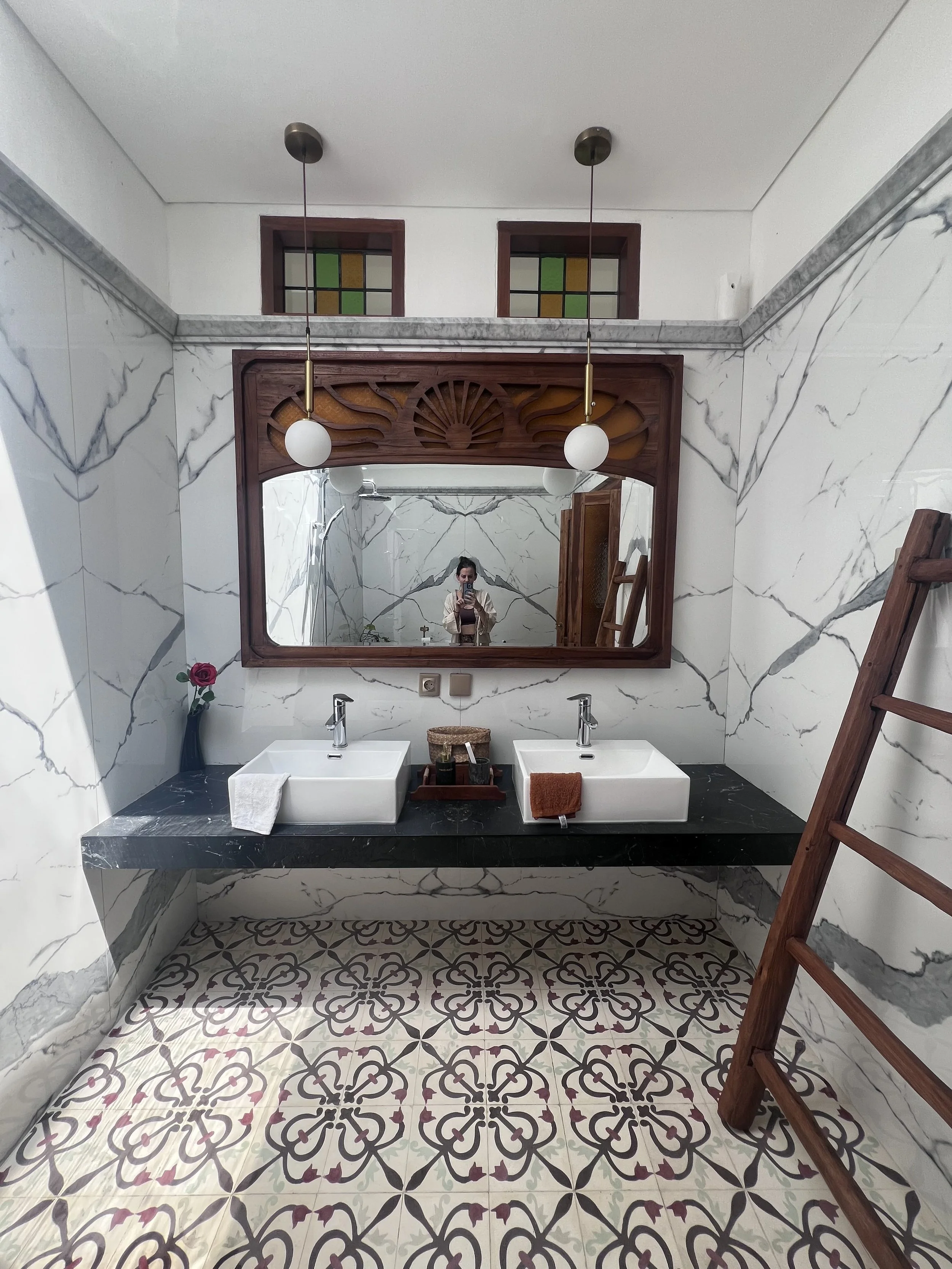
At home in Bali, shortly after being diagnosed with shingles
The kind of rest you can't negotiate with
I'm actually quite good at rest when I have chosen it.
I love yoga, meditation, slow mornings, time in nature and retreat days. I know how to create beautiful spaces for slowing down. Rest, when it is intentional and planned, is something I understand intellectually and something I genuinely value. I’ve even built a business around it.
What I'm less good at is the kind of rest that interrupts your plans. The inconvenient kind. The kind where you don't get to decide when you're finished resting because your body has made the decision for you.
Especially when you're far from home.
Being sick abroad always turns the volume up on my anxiety. There is something particularly vulnerable about feeling unwell when you are thousands of miles away from your familiar surroundings, your own bed and the people and places that make you feel safe. Suddenly, a minor illness can feel much bigger.
And while I thought I was handling the stress of travelling reasonably well, my body seemed to have a different story to tell. That has made me think a lot about the relationship between shingles and stress.
To be clear, stress doesn't simply cause shingles, and I don't believe we should look at an illness like this and conclude that we somehow brought it upon ourselves by not resting enough. Shingles is a complex condition, and age, immune function, previous illness and a number of other factors can all play a role.
But the immune system doesn't operate separately from the rest of our lives.
And there is growing interest in the relationship between shingles, psychological stress, depression and overall health. Research has found associations between shingles and a number of conditions that can affect immune function, including stress and depression.
That interests me because of what it says about the cumulative nature of depletion.
We tend to imagine stress as something dramatic. A huge event. A crisis. Something that happens and then ends. But much of the stress we experience as adults isn't like that. It's cumulative. It's the low-level hum of emails, deadlines, financial pressure, poor sleep, uncertainty, perimenopause, caring for others, relationship worries, work demands, social media, constant stimulation and the feeling that there is always something else we should be doing.
It's the way we can spend weeks or months overriding the more subtle signals from our bodies because nothing feels quite serious enough to warrant stopping.
We're tired, but not that tired. We're anxious, but still functioning. We're overwhelmed, but managing. We're sleeping badly, but we'll catch up at the weekend. We're exhausted, but we'll feel better after the next holiday. And so we carry on.

The tell-tale shingles rash on my right abdomen
Why are we seeing more cases of shingles in millennial women?
One of the reasons my experience has made me curious about shingles in your 40s is that I'm clearly not alone in being surprised by it.
Shingles becomes more common with age, which is why vaccination is routinely offered to eligible older adults in the UK. But younger adults can develop it too. In recent years, researchers have been paying increasing attention to shingles among people in their 30s and 40s.
A 2019 US study found that the sharpest increase in shingles incidence was among adults aged 30 to 49, with cases in this age group more than doubling over the study period. More recent research has also highlighted the relationship between shingles and certain health and mental-health conditions among younger adults.
There is no single explanation for this, and it would be misleading to suggest that modern life or stress alone is responsible.
But I can't help wondering what the wider picture tells us about the health of women in midlife. Because this is also the age when many women are carrying an enormous amount.
We are working. Building careers. Running businesses. Raising children or caring for ageing parents. Managing households. Supporting partners. Navigating relationships. Dealing with financial pressures. Trying to stay healthy. Trying to exercise. Trying to eat well. Trying to sleep. Trying to remember to take the supplements we bought six months ago.
And increasingly, we are expected to do all of this while being endlessly available.
I think women have become extraordinarily good at functioning while depleted. We call it resilience. We call it being capable. We call it getting on with things. And sometimes it is resilience. Sometimes life genuinely asks a lot of us and we rise to meet it. But there is a difference between resilience and constantly overriding ourselves. There is a difference between being able to cope and actually being well.
My body had a different story to tell
Reflecting on it now, I can see that my body had been struggling for a while. I’d been sick several times during my travels
Nothing particularly dramatic. Just enough little illnesses and periods of feeling under par to suggest that my body had been asking for more recovery than I was giving it. And each time I became ill, I was forced to surrender. That word has stayed with me. Surrender.
Not in the sense of giving up or becoming passive, but in the sense of releasing the belief that I can control everything. Accepting what is here. Trusting that my body is not something to fight against, but something to listen to. This is something I find fascinating in my work with women, too.
So many of us have learned to disconnect from our bodies in subtle ways. We learn to ignore hunger because we're busy. We work through exhaustion. We exercise because we think we should, rather than asking what our bodies actually need. We push down anger. We override sadness. We dismiss anxiety. We tell ourselves that everyone else seems to be coping, so we should be able to cope too. And because nothing has technically gone wrong, we assume we're fine.
Until something does.
I'm not suggesting that my shingles was some kind of punishment for not resting enough. Nor do I think every illness can or should be interpreted as a message from the body. My experience did make me wonder though whether I could become more attentive to the more subtle messages my body gives me. The signs that I am moving beyond my capacity.
Rest isn't something you earn
Time and time again, this is the message my body keeps giving me. Rest is not a reward. It isn't something we should have to earn by being productive enough first. We often structure our lives as though rest comes at the end. Once I've finished this project, I'll rest. Once this deadline is over, I'll slow down. Once I've got through this busy period, I'll take some time off. Once everything is sorted, I'll breathe.
But everything is never sorted.
There is always another email. Another deadline. Another person who needs something. Another goal to reach. And if rest is always waiting for us at the end of the list, we may never get there.
Perhaps rest needs to be part of the rhythm instead. Not necessarily hours spent lying down. Not endless holidays. Not avoiding everything difficult. Rest can be surprisingly ordinary. It can be going to bed instead of scrolling for another hour. It can be taking a walk without our headphones in. It can be cancelling something when you don't have the capacity. It can be eating a proper lunch rather than working through it. It can be sitting outside for ten minutes. It can be saying no. It can be allowing somebody else to help you. It can be taking a day where you don't need to improve yourself in any way. And sometimes it really is doing nothing.
I think we have become so accustomed to measuring the value of our days by what we have achieved that doing nothing feels uncomfortable. But the body doesn't measure productivity in the same way we do. It needs periods of recovery. It needs sleep, nourishment, stillness, safety and space.
A field that has rested
Being ill in Bali wasn't how I imagined the last part of my six month-long adventure. But it gave me something I didn't realise I needed: a forced slowing down. A reminder that health comes before the itinerary. That sometimes the most important thing we can do is nothing. We don't have to be at breaking point before we are allowed to rest.
I'm learning to notice tiredness before exhaustion. To pay attention to the moments when my nervous system feels overwhelmed. And to remember that slowing down isn't taking us away from the life we want. It’s actually what allows us to live it.
There is something about Ovid's words that feels particularly relevant to me now:
“Take rest. A field that has rested gives a bountiful crop.”
A field cannot produce endlessly. Neither can we.
There are seasons of growth and seasons of stillness. Seasons of doing and seasons of being. Seasons when we are outward-facing and seasons when something within us needs tending. The field doesn't apologise for lying fallow. It doesn't wonder whether it has been productive enough.
It simply rests.
And, in time, it grows again. Maybe we can learn to do the same.
Ready to rediscover rest as a tool to support your changing body?
I was 38 when I first started to notice changes in my body. I found myself searching for answers and realised that much of the support I was looking for simply didn’t exist. So I created it.
Powerful Perimenopause was born from my own need to understand my changing body — and from a desire to create the support I wished I’d had. It’s the culmination of hundreds of hours studying women’s health, nervous system regulation, yoga, embodiment and coaching, alongside my own experience of navigating this transition.
And because I know how difficult it can be to slow down, I also created The Unhurried Woman — a pathway for women who are ready to step out of the cycle of pushing, achieving and holding everything together, and discover a slower, more nourishing way of living.
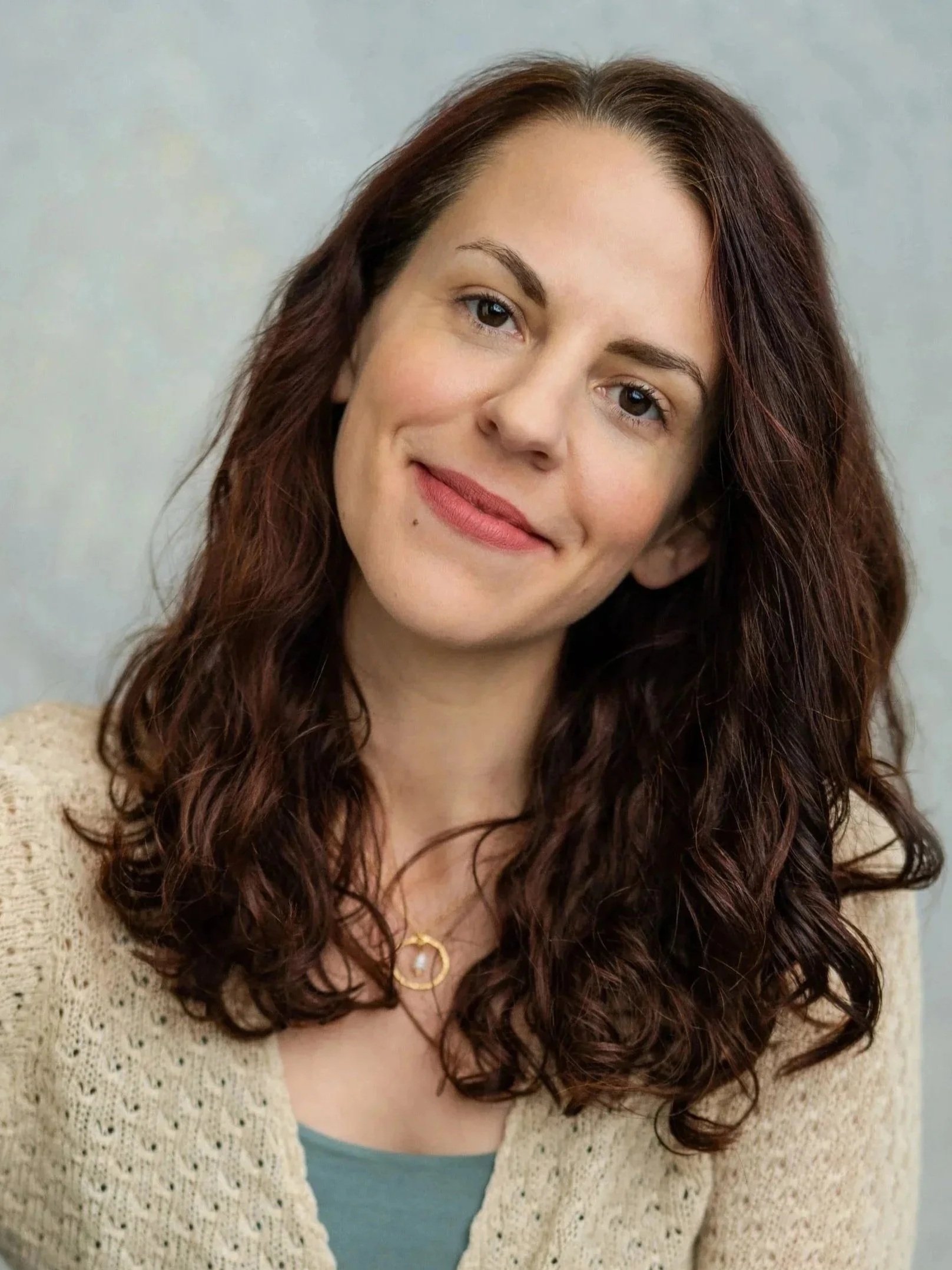
Hi, I’m Bea…
I help sensitive, purpose-driven women feel safe to rest, receive & thrive.
Through holistic coaching and restorative retreats, I help sensitive, purpose-driven women to slow down, reconnect with themselves and create a life that feels deeply aligned with who they are.
Because when your body remembers that it's safe, rest becomes possible. And from there, everything changes.
Enjoyed this article? You may also like: