
The Reinvention Years: Why Women Redefine Their Lives in Their 40s
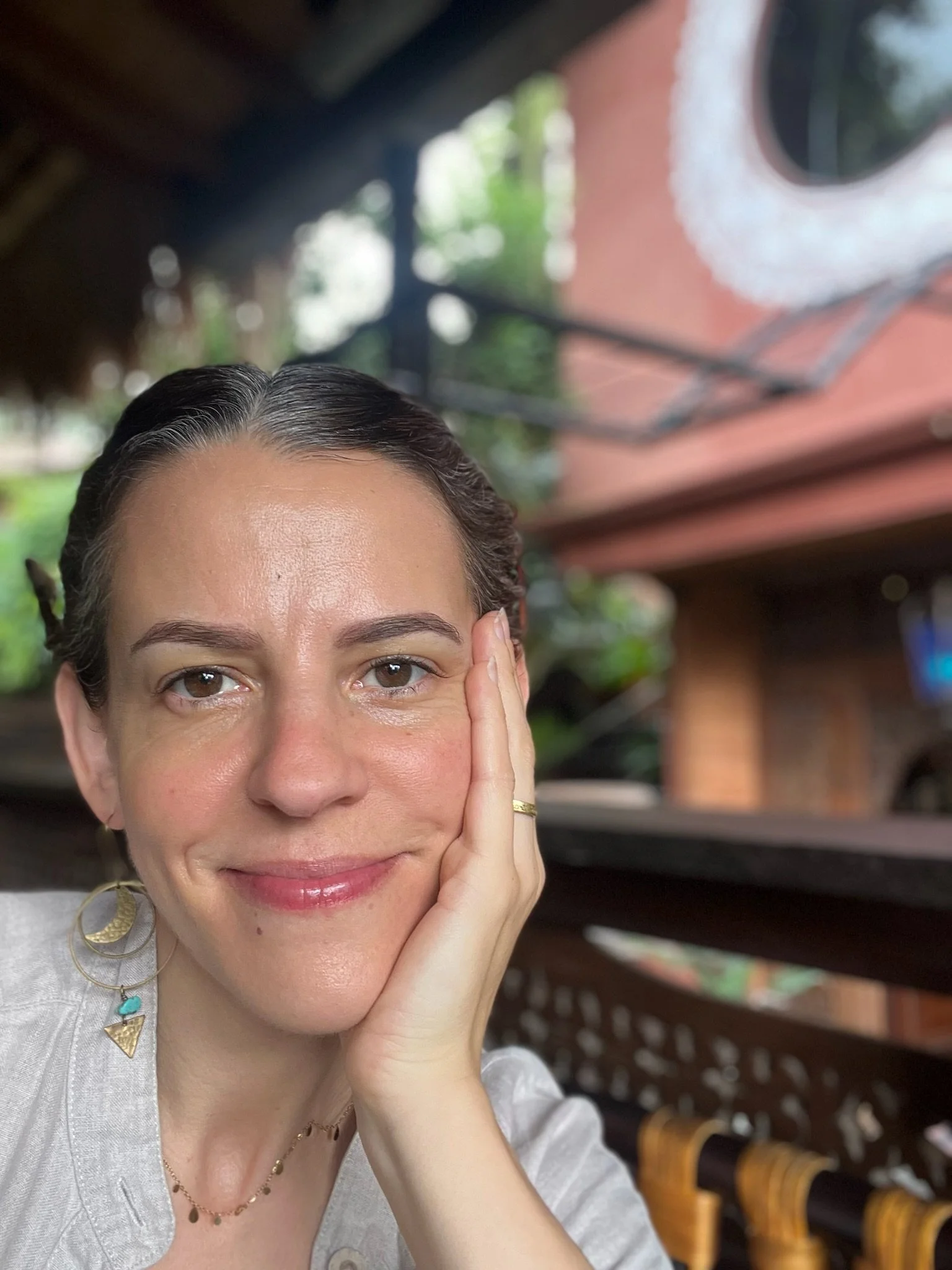
the 40s — a time to reassess, refine and ask whether the life you've built still fits the woman you've become.
For many women, the forties can become a decade of profound questioning and redefinition. Not necessarily because anything is wrong, but because we are changing.
For me, the questioning started about five years earlier.
In my mid-thirties, I was at the pinnacle of my career. From the outside, I had every reason to feel successful. I'd worked hard to get there, built a career I was proud of and reached a position that, for a long time, I'd imagined would make me happy.
But my job didn't just feel flat. It felt soul-destroying. I would leave the office every Friday feeling like I'd been released from prison. Looking back, I don't know how I stayed as long as I did. Eventually, my body said enough. So I quit.
What followed was an eventual pivot into the work I'm doing now, but the transition wasn't a neat or immediate leap into my calling. There was a lot of uncertainty, a lot of questioning and, if I'm honest, a lot of restlessness.
I had left something that no longer felt right, but I hadn't yet found what did.
And I think this is something we don't talk about enough. Sometimes we know that the life we're living no longer fits before we know what we want instead. There can be a strange liminal space between knowing what you no longer want and knowing what you want instead, and we can mistake that uncertainty for failure when actually it may simply be part of the process.
A relationship dynamic you once tolerated suddenly feels impossible to ignore. The constant busyness that once made you feel successful begins to feel exhausting. You start craving more space, more meaning, more creativity, more time outside, more time alone.
You may find yourself wondering: Is this really what I want? What if I did things differently? Who am I now?
And perhaps most unsettling of all: What if the life I've built isn't the life I want to keep living?
When the old life stops fitting
Perhaps you've spent the first few decades of your adult life becoming very good at doing what is expected of you. Building a career, being dependable, caring for other people, achieving, providing, keeping everything moving, saying yes, pushing through and being the strong one.
Maybe those things genuinely mattered to you. Maybe they still do. But somewhere along the way, your relationship with them begins to change.
You realise that being endlessly available comes at a cost. That success without purpose and meaning doesn't feel particularly successful. That your capacity for overworking, people-pleasing and overriding yourself isn't what it used to be. You become less willing to abandon yourself in order to keep everyone else comfortable.
This new clarity might make you feel as though you're becoming difficult but you're simply becoming more discerning about what you want, what you need, and what you're no longer willing to tolerate.
What once seemed important may lose its shine. What once felt like success may no longer feel like the kind of life you want to build.
It can feel deeply disruptive, but it can also be deeply clarifying.
The Quickening
This is one of the reasons I find Red School's concept of The Quickening so helpful.
Alexandra Pope and Sjanie Hugo Wurlitzer, founders of Red School, use the term to describe the autumn of our menstruating years — the phase many of us know as perimenopause.
And I love the phrase itself. The Quickening suggests movement, a stirring, an animation, something coming alive.
Rather than seeing this stage of life simply as a period of hormonal change or something to be endured, the Red School invite us to consider it as a significant developmental transition — a time when our priorities, perspectives and relationship with ourselves can begin to change. A time when the desire for something more can become stronger. A lot stronger.
We can feel an increasing urgency to respond to what is calling us.
For me, that calling was travel.

On the famous Train Street in Hanoi, Vietnam.
Last year, I left a well-paid job and packed up my life to spend six months travelling around South-East Asia. I met plenty of much younger backpackers along the way, and there were moments when I was very aware that I wasn't following the conventional timeline for a woman in her forties.
But the thrill of packing up my life for six months, stepping away from everything that was familiar and giving myself the space to explore, learn, rest and simply be felt incredibly empowering. More than that, it felt alive.
It wasn't about running away from my life. It was about moving towards something I needed.
I wanted adventure. I wanted spaciousness. I wanted to learn. I wanted to experience the world with fresh eyes. I wanted to nourish my soul. And there was something deeply liberating about allowing myself to want those things without needing to justify them.
I think there's an important distinction here. Reinvention isn't always about rejecting the life you've built. Sometimes it's about moving towards something that has been missing from it.
Perhaps that is part of what happens during these reinvention years. We become less interested in what we're supposed to want and more interested in what actually makes us feel alive.
The calling isn't always dramatic. It might be travel, a different career, a creative project, more time alone, a relationship that feels more nourishing, or simply a slower way of living. Whatever form it takes, there can be a growing sense that we don't want to keep putting it off.
Something is quickening, and becoming harder to ignore.
But I do wonder whether, for many women, something intensifies as we move through our forties. The volume gets turned up. The things we've been able to tolerate become harder to tolerate, and the parts of ourselves we've been keeping quiet begin to speak a little louder.
And suddenly, we can no longer keep living on autopilot.
The reinvention years
I think of this period as The Reinvention Years.
Not because every woman needs to leave her marriage, quit her job, move to the countryside and become a ceramicist. Although, if that's what you want, perhaps that's worth listening to too.
Reinvention doesn't necessarily mean starting again. It doesn't mean blowing up the life you've built and becoming someone entirely new. Sometimes it means asking better questions about the life you already have.
What still feels true? What no longer does? What have I outgrown? What have I been doing because I genuinely want to, and what have I been doing because I think I should? Where am I still performing a version of myself that no longer exists? What would I choose if I wasn't trying to prove anything?
And perhaps the biggest question of all: What does the woman I am becoming actually want?
These questions can feel surprisingly difficult because we've often spent decades becoming who we are. We have identities, careers, homes, partnerships, friendships, responsibilities and reputations. We have a whole life that other people recognise.
Changing can therefore feel like losing something, even when what we're moving towards is deeply wanted.

Welcoming in 2026 in El Nido, Palawan in the Philippines.
You don't have to burn it all down
There is another way to think about reinvention.
You don't have to burn your old life to the ground. You can listen, experiment, make small changes, create more space and follow a curiosity. You can say no to something you've always said yes to. You can begin making room for the part of yourself that has been waiting patiently underneath all the doing.
Sometimes reinvention is remarkably quiet.
It might look like changing the way you structure your week, making time for something you used to love, taking your work less seriously, leaving a friendship that no longer feels nourishing or going back to something you abandoned years ago. It might simply mean allowing yourself to want something without immediately asking whether it's practical.
Or it might mean admitting, I don't want to do this anymore.
That sentence can be the beginning of a whole new life.
There is wisdom in the restlessness
We are often taught to get rid of discomfort as quickly as possible. If we're restless, we distract ourselves. If we're unhappy, we fix it. If we're tired, we push through. If we're questioning our choices, we reassure ourselves that everything is fine.
But what if restlessness has something to tell us?
What if the discomfort is not necessarily a problem? What if it is the part of you that knows you have become too small for the life you're living?
This doesn't mean every urge needs to be acted upon. Not every difficult feeling is a calling, and not every woman will experience midlife in the same way.
But there can be enormous wisdom in creating enough quiet to hear what is underneath the noise. Because sometimes what feels like a crisis is actually a recalibration.
Your values are changing. Your capacity is changing. Your relationship with your body is changing. Your sense of time is changing.
And suddenly, the question isn't, How can I keep doing everything I've always done?
It's, What is actually worth my energy now?
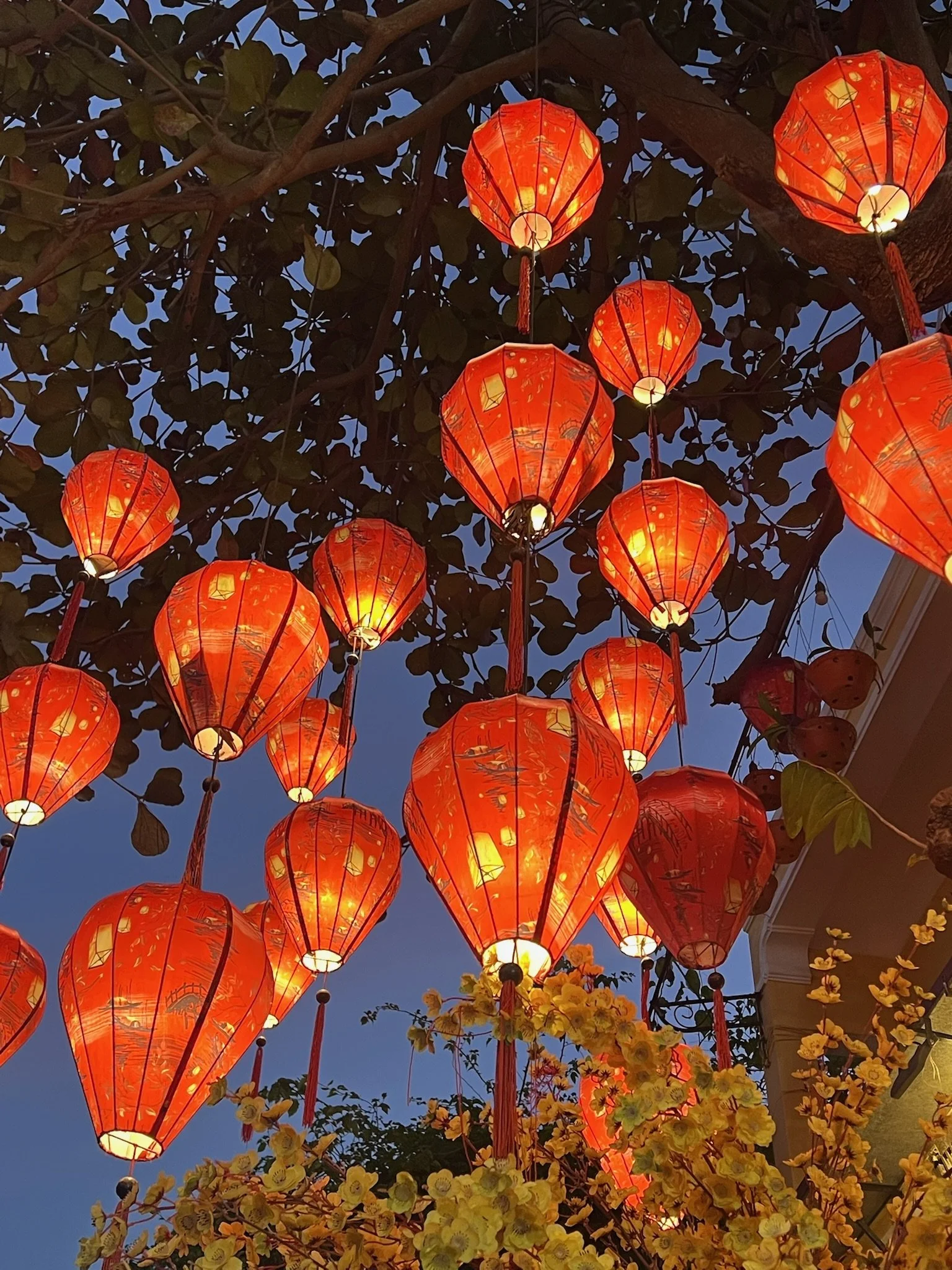
Lanterns in Hội An, Vietnam
a new chapter of adulthood
Perhaps this is why the language of “reinvention” feels so different from the language of “self-improvement”.
Self-improvement suggests that there is something wrong with who you are. That you need to become better, more productive, more disciplined, more successful, more desirable.
But reinvention can be something else entirely.
It can be an act of remembering. Remembering what matters to you, what makes you feel alive, and the parts of yourself that got buried beneath responsibility. Remembering that your life belongs to you.
And perhaps this is the deeper invitation of these years: not to become someone new, but to become more fully yourself.
The Quickening, in Red School's framework, offers a beautiful way of understanding this period. Not simply as a collection of symptoms to manage, but as a transition — a time of preparation, awakening and inner change.
I find that idea hopeful.
Because it means we don't have to treat every change as something that needs to be fixed. Some changes might be invitations: an invitation to slow down, to listen, to question, to release, to receive, to choose again.
What if this is the beginning?
There is a particular freedom that can come from realising you don't have to spend the second half of your life maintaining the first half.
You are allowed to change your mind. You are allowed to want different things. You are allowed to disappoint people. You are allowed to make space. You are allowed to become less available for what drains you and more available for what nourishes you.
You are allowed to build a life around the woman you are now, rather than the woman you were when you first built it. Perhaps these really are the reinvention years. Not a crisis. Not an ending. But a threshold. A time when something inside you begins to quicken. A time when the old ways of living become harder to tolerate and a new way of being begins, quietly, to emerge.
You don't need to know exactly where it's taking you. You don't need a five-year plan. You may simply need enough stillness to hear the question beneath the restlessness:
What wants to change now?
And enough courage to begin listening.
If you're in a season of questioning, change or transition, you don't have to navigate it alone.
If you're longing to slow down, step out of the pressure to constantly do and achieve, and reconnect with what you really want, The Unhurried Woman is an invitation to pause, listen and make space for what comes next.
And if you're moving through the physical and emotional changes of perimenopause and wondering what this transition might be asking of you, Powerful Perimenopause offers a space to understand, explore and navigate this chapter with greater awareness and self-trust.
The next chapter doesn't always need to be planned. It simply needs to be listened for.
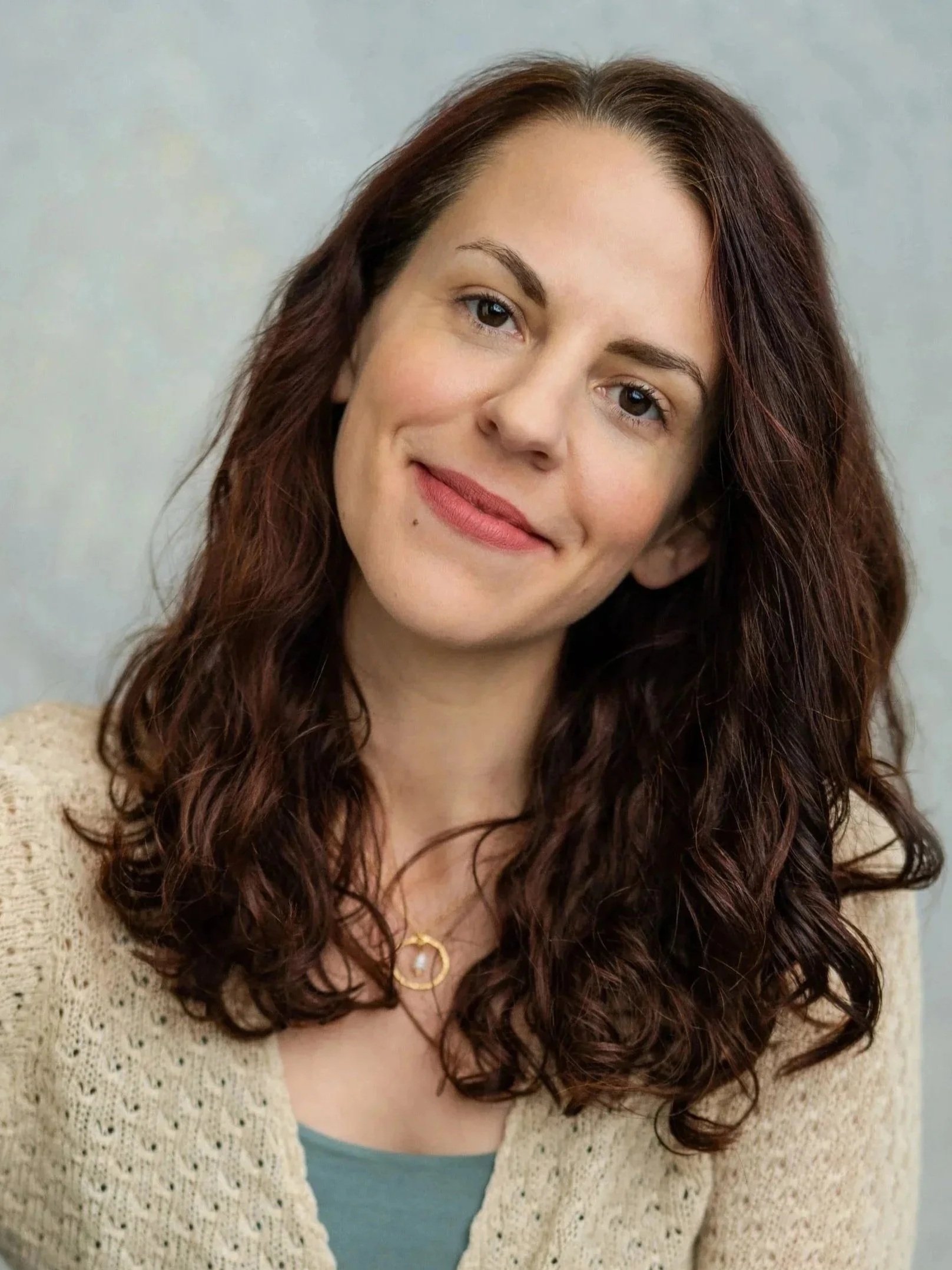
Hi, I’m Bea…
I help sensitive, purpose-driven women feel safe to rest, receive & thrive.
Through holistic coaching and restorative retreats, I help sensitive, purpose-driven women to slow down, reconnect with themselves and create a life that feels deeply aligned with who they are.
Because when your body remembers that it's safe, rest becomes possible. And from there, everything changes.