
Why Does Everything Feel So Much Harder Before My Period? Day 19-21 & The Transition Into Inner Autumn

The week before your period can feel like everything is falling apart—but your body is simply preparing you for a different season.
There are certain days in my menstrual cycle that have taught me more about myself than any self-help book ever could. For me, one of those days is Day 19.
It's the day where life suddenly feels a lot harder. My patience becomes shorter, my emotions sit closer to the surface and the things I've been tolerating now feel impossible to ignore. Nothing in my life has changed overnight, yet somehow everything feels different. The smallest inconvenience can leave me in tears, and I find myself wondering why I feel so unlike myself.
For years, I assumed I was simply becoming irrational or overly emotional. Then I discovered the wonderful work of the Red School and their framework of the Inner Seasons. It completely changed the way I understood this part of my cycle.
Crossing the Threshold into Inner Autumn
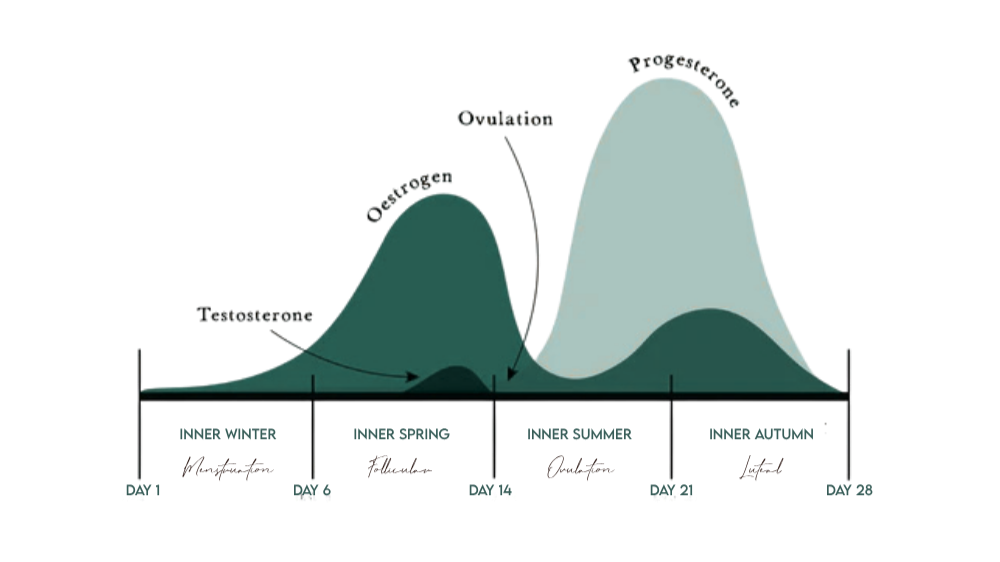
Many women notice a dramatic shift around Day 19-21 of their cycle. Although every cycle is different, in a typical 28 day cycle this often marks the point where we're crossing from Inner Summer into Inner Autumn. I don't think it's a coincidence that this transition can feel so intense.
Inner Summer, which corresponds with ovulation, is a naturally outward-facing season. It's a time when many women feel more energetic, generous and available to others. We often have greater capacity for socialising, caring, communicating and getting things done. Like summer in nature, our energy is expansive.
Days 19-21, however, often feel like standing on the threshold between two seasons.
The outward momentum of Inner Summer begins to ebb away, while the quieter, more reflective energy of Inner Autumn starts to emerge. Our hormones are shifting, but so too are our energetic needs. The pace that felt effortless a few days ago no longer feels sustainable, yet we haven't fully settled into this new season. It's as though the metaphorical ground beneath our feet is beginning to move.
Transitions are rarely comfortable, whether they're between jobs, relationships, life stages or the seasons of the year. Perhaps it's no surprise that the transition within our menstrual cycle can feel unsettling too.
What's Happening Hormonally?
From a physiological perspective, this transition makes perfect sense.
After ovulation, progesterone becomes the dominant hormone. One of its roles is to prepare the uterus for a possible pregnancy, but it also has important effects on the brain and nervous system. When progesterone is balanced, it can have a wonderfully calming effect, helping us feel more relaxed and grounded.
The challenge comes when pregnancy doesn't occur, which for most of us is every month.
As the body prepares for menstruation, both progesterone and oestrogen begin to fall. During perimenopause, these hormonal fluctuations become even more unpredictable. Some months progesterone is lower than expected, while oestrogen rises and falls in less predictable ways. Rather than following the smooth hormonal rhythm we experienced in our twenties and thirties, the body starts improvising.
For many women, this hormonal transition can feel as though someone has quietly removed the emotional cushioning from everyday life. The things that felt manageable a few days ago suddenly feel overwhelming. Our tolerance begins to wane, our nervous system becomes more reactive and life simply feels harder.
Hormones help explain what is happening. The wisdom of the Inner Seasons helps explain what this phase is inviting us to notice.
The Wisdom of Inner Autumn
One of the things I love most about the Inner Seasons is that they invite us to see our menstrual cycle as something far richer than a series of hormonal changes. Rather than viewing our bodies as unpredictable or inconvenient, they encourage us to recognise that each phase brings its own unique gifts.
Just as autumn in nature is a season of harvesting, slowing down and letting go, our Inner Autumn invites us to do the same.
Our energy naturally begins to turn inwards. We become more reflective, more discerning and often less willing to tolerate things that no longer feel aligned.
It's no coincidence that our patience for people-pleasing, overcommitting and ignoring our own needs often wears thin during this phase. The things we've quietly accepted throughout the rest of the month suddenly become much harder to ignore.
Inner Autumn is not trying to make our lives more difficult, it is actually helping us see our lives with greater clarity. Like the trees shedding their leaves, this season quietly asks:
What am I ready to let go of?
Where in my life do I need to say no?
It might be an unrealistic expectation you've been carrying, a commitment you accepted out of guilt, a relationship that no longer feels reciprocal or the exhausting belief that everyone else's needs must always come before your own.
When we begin to understand the wisdom of Inner Autumn, we stop seeing Days 19-21 as the moment everything falls apart. Instead, we can recognise it as the beginning of a season of discernment—a time when our bodies reveal what is no longer serving us.
Do Days 19-21 Tell the Truth?
One of the biggest lessons I've learnt is that Days 19-21 don’t create new problems. They simply change our capacity to hold them.
The curt message from your boss doesn't read any differently than it did yesterday. Your children aren't asking any more of you than they were last week. Your diary isn't objectively fuller. Yet everything feels heavier, louder and somehow more personal.
I don't believe this part of our cycle invents these feelings. Nor do I believe every thought we have during the premenstrual phase is objectively true. Hormonal fluctuations can absolutely increase anxiety, emotional sensitivity and catastrophising.
But I do think this phase has a remarkable way of shining a light on the parts of our lives that we've been quietly tolerating.
The friendship that feels one-sided. The boundary we've been avoiding. The resentment we've never voiced. The exhaustion we've been pretending isn't there. The life that no longer fits.
Perhaps our Inner Autumn isn't asking us to believe every thought we have. Instead, it invites us to become curious about why those thoughts are appearing in the first place.
Rather than asking, "Why am I feeling like this?" we might begin asking, "What is this phase of my cycle trying to show me?" or “Where in my life am I living out of alignment?”
Meeting Yourself With Compassion
Understanding what's happening doesn't magically make this part of my cycle easier. I still have months where I feel less resilient, more emotional and quicker to become overwhelmed. The difference is that I no longer see these feelings as evidence that something is wrong with me.
One of the biggest changes I've made has been talking openly to my partner about cycle awareness. He now understands that there are certain points in my cycle when I have less capacity and need a little more patience, support and understanding. Rather than wondering what's ‘wrong’, we both recognise that I'm moving through a different season. That simple shift in awareness has made a huge difference to our relationship.
I've also learnt not to make life-changing decisions around this time of my cycle, if I can help it! Instead, I leave a little more space in my diary, lower my expectations of myself and remind myself that I don't have to navigate every day with exactly the same energy or emotional capacity.
Our culture celebrates consistency, but nature has never worked that way. The seasons change, the tides ebb and flow, and trees don't produce fruit all year round. Yet somehow we've come to expect ourselves to show up with the same energy, patience and resilience every single day of the month.
The more I understand my own cycle, the more I realise that my body isn't working against me. It's simply asking me to live in relationship with its changing seasons rather than constantly fighting against them.
Perhaps that's the real gift of Days 19-21. They aren’t here to make life more difficult. They’re here to remind us that we're entering a different season—one that invites us to slow down, listen more closely and gently begin letting go of what no longer belongs.
Could This Be the Conversation Your Body Has Been Waiting For?
If you've recognised something of yourself in this article, you don't have to navigate it alone. Many of the women I work with arrive feeling confused by the changes happening in their bodies throughout the month. Together, we begin to notice the patterns in your cycle, understand what your hormones and nervous system might be trying to communicate, and explore practical ways to work with your body, rather than constantly feeling at odds with it.
If you want to better understand your menstrual cycle and how it can support you to live a life which feels more aligned, I offer one-to-one coaching which will help you to reconnect with yourself and listen to the wisdom that's already within you.
If that feels like the conversation you've been looking for, I'd love to invite you to apply for a complimentary Discovery Call. It's a relaxed, no-pressure opportunity for us to explore what's bringing you here and to see whether working together feels like the right next step.
Main photo by Aynur Latfullin via Pexels
Second photo by Anastasia Bladyko via Pexels
free guide: 10 tips to Support Your Body Through Perimenopause
Sign up below to download my free 13 page guide and workbook which offers practical support to help you better understand your changing body and create habits that nourish you through this important transition.

Hi I’m Bea
I help sensitive, purpose-driven women feel safe to rest, receive & thrive.
Through holistic coaching and restorative retreats, I help sensitive, purpose-driven women to slow down, reconnect with themselves and create a life that feels deeply aligned with who they are.
Because when your body remembers that it's safe, rest becomes possible. And from there, everything changes.
Enjoyed this article? You may also like: